How the Black Death Reshaped European Society and Economy — And Why We Still Feel Its Impact Today
The Black Death, a catastrophic pandemic that ravaged Europe from 1347 to 1351 and beyond, is far more than just a historical footnote. It was a force of nature that brutally tore through the very fabric of society, dismantling long-standing systems and, quite unexpectedly, laying the critical groundwork for the modern Europe we know today. Here’s what most people don’t realize: this pandemic didn’t just kill people—it fundamentally rewrote the rules of how society operates, creating ripple effects that still shape our world nearly 700 years later.
In this deep dive, I’ll walk you through the very real, tangible shifts that profoundly altered labor, family life, healthcare, and even our legal systems. This isn’t just theory; it’s what happened, grounded in archaeological evidence, economic records, and demographic studies that reveal the true scope of this transformation. It’s a fascinating narrative that still echoes in our world, and understanding it gives us crucial insights into how societies adapt to existential crises. For more details, see our guide on Exploring Colonial Exploitation’s True Drivers.
The Unprecedented Economic Earthquake: Labor, Wages, and the Fall of Feudalism
Here’s the insider secret that changed everything: The demographic collapse was so severe it created the world’s first recorded “seller’s market” for labor. According to demographic historians studying parish records and tax documents, the Black Death reduced the European population from an estimated 75-80 million to roughly 50-60 million by 1400. This wasn’t merely a tragedy; it ignited an economic transformation so profound it’s almost hard to fathom. For more details, see our guide on Inquisition’s Tools: Secrets of Control Unveiled.
We’re talking about wages jumping by a staggering 40-100% in many regions during the late 14th century. That’s not just a change; it’s a seismic shift in purchasing power that completely upended medieval economics. In England, agricultural laborers who earned 2-3 pence per day before 1348 were commanding 4-6 pence by 1380—a doubling of real wages that historians call unprecedented in medieval records. For more details, see our guide on Inquisition’s Decline: Key Factors Unraveled.
Try this perspective shift: Imagine if half your coworkers disappeared overnight, but the work still needed to be done. That’s exactly what happened across Europe, and the remaining workers suddenly held all the cards.
The Game-Changer: When Peasants Became Negotiators
This dramatic labor shortage didn’t just impact wages; it catalyzed a massive shift in how people conceived of work itself. Before the plague, most peasants were legally bound to the land through villeinage—a system that essentially made them property of the manor. Archaeological evidence from deserted medieval villages shows entire settlements abandoned as survivors migrated to areas offering better opportunities.
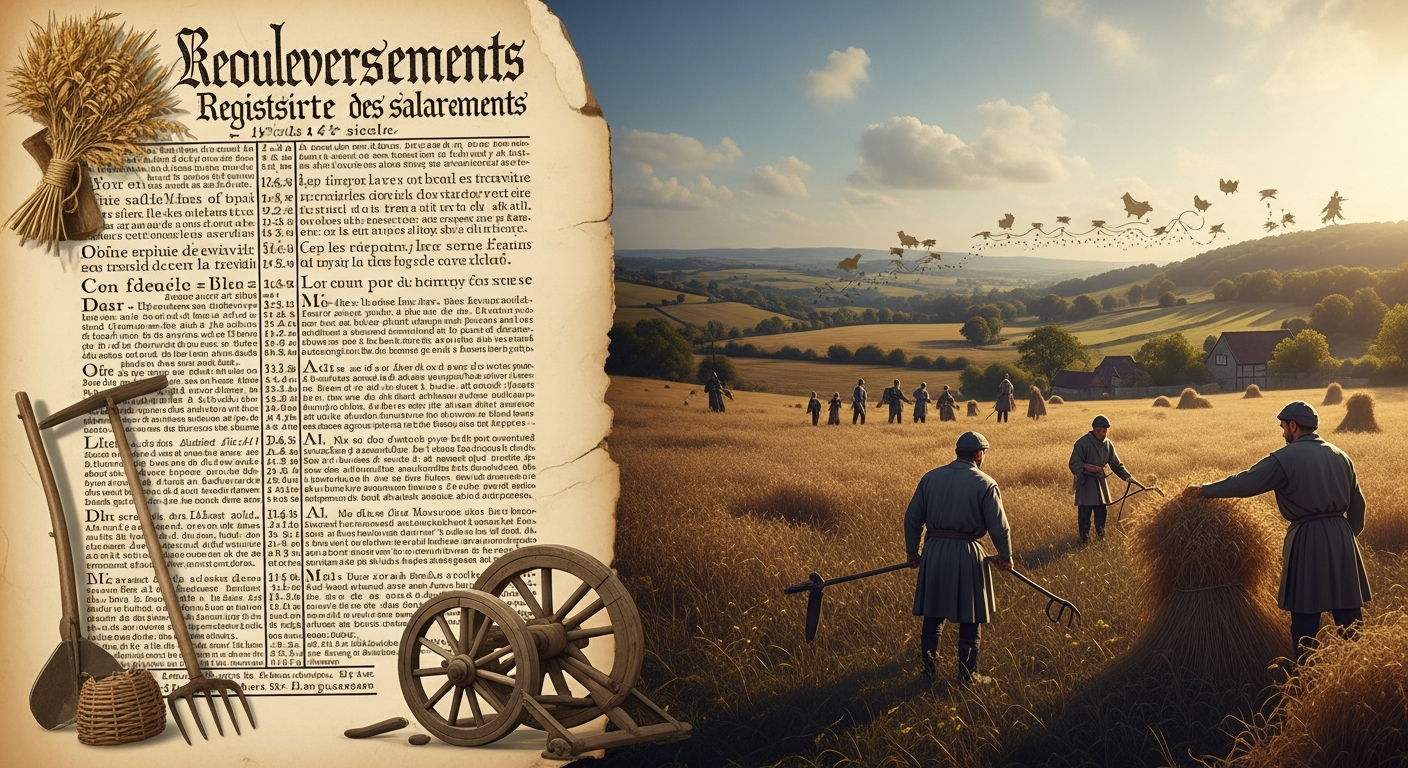
What works in crisis: Suddenly, peasants had leverage. They could leave, negotiate vastly improved terms, or simply refuse to work for the old, abysmal rates. The English Statute of Laborers (1351) attempted to freeze wages at pre-plague levels, but court records show it was largely ignored. Similar legislation failed across Europe—from France’s Ordonnance of 1351 to various German principality laws.
The observable outcome? In parts of England, not only did wages surge, but the entire structure of land tenure began shifting from labor service to money rents. This transition, documented in manorial court rolls, represents one of history’s most significant steps toward a market-based economy.
Beyond Wages: The Rise of Contractual Labor
Here’s what most history books miss: the Black Death created Europe’s first widespread system of contractual employment. With traditional feudal obligations breaking down, both workers and employers had to negotiate terms—wages, working conditions, duration of employment. This shift toward contractual relationships laid the groundwork for modern employment law and worker rights.
Manor records from the late 14th century show an explosion in written agreements between lords and laborers, something virtually unknown before 1348. These documents represent the birth of formal employment contracts in Western Europe.
Agricultural Revolution: From Survival to Strategy
The pattern interrupt nobody talks about: Facing higher labor costs and growing worker demands, landowners didn’t just complain—they innovated. Many shrewdly pivoted toward sheep farming, which proved significantly more profitable and less labor-intensive than traditional grain cultivation. This strategic shift contributed heavily to the decline of the centuries-old open-field system and spurred the rise of enclosed farms.
In England, wool exports increased by over 30% between 1350 and 1400, despite the population decline. This wasn’t coincidence—it was economic adaptation in real time. The shift toward pastoral farming required fewer workers but generated higher profits, creating a win-win scenario that accelerated the commercialization of agriculture.
Here’s the breakthrough insight: The demographic vacuum created opportunities for expanding agricultural land into previously marginal areas. Pollen analysis from lake sediments shows that forests began reclaiming abandoned farmland in some regions, while in others, survivors consolidated the best agricultural land, leading to increased productivity per worker.
The Unexpected Innovation Boom
The labor shortage forced technological innovation at an unprecedented pace. Water mills, which had been slowly spreading across Europe, suddenly became essential. Archaeological evidence shows a surge in mill construction and modification during the late 14th century. Wind power technology, previously limited to coastal areas, spread inland as communities sought labor-saving alternatives.
Try this and see the difference: Communities that invested in labor-saving technology during the crisis emerged stronger and more prosperous. Those that resisted change often saw continued population decline and economic stagnation.
A Crisis of Faith and the Birth of Modern Medicine
The transformation wasn’t solely economic; it struck at the very heart of medieval society: religion. The epidemic tragically decimated the ranks of the clergy—some estimates suggest 40% mortality rates among priests, who were exposed through last rites and pastoral care. Entire monasteries were abandoned, and countless communities found themselves without spiritual guidance for months or years.
What people don’t realize: This clerical shortage forced the Church to ordain priests with less training and education, leading to a noticeable decline in clerical quality that persisted for generations. More significantly, people began to question the Church’s authority and its ability to explain or prevent what many perceived as divine wrath.
The Medical Revolution Nobody Expected
The Black Death starkly exposed the profound limitations of medieval medical knowledge. Physicians, working with humoral theory and lacking understanding of bacterial infection, struggled helplessly against the disease. However, this crisis sparked crucial innovations that laid the groundwork for modern medicine.
The game-changing development: Italian city-states, particularly Venice and Genoa, implemented the first systematic quarantine procedures. The term “quarantine” itself comes from the Italian quaranta giorni (40 days)—the period ships were required to wait before entering port. These measures, documented in Venetian archives, represent humanity’s first organized public health response to epidemic disease.
Medical schools began emphasizing direct observation over ancient texts. The University of Montpellier, for instance, started requiring students to witness autopsies—a practice previously forbidden by Church doctrine. This shift toward empirical observation marked the beginning of evidence-based medicine.
Reshaping Laws, Society, and Global Interconnectedness
Here’s the insider secret about legal transformation: The massive mortality rate created an inheritance crisis of unprecedented scale. Traditional inheritance laws, designed for stable populations, couldn’t handle situations where entire family lines were extinguished. Legal systems had to rapidly evolve, creating new precedents for property transfer and estate management.
English court records show a 300% increase in inheritance disputes between 1350 and 1380. This legal chaos drove innovations in contract law, property rights, and estate planning that form the foundation of modern legal systems. The concept of “fee simple” ownership—absolute property rights—emerged partly from the need to clarify ownership when traditional feudal relationships collapsed.
The Global Ripple Effect
What works on a global scale: The Black Death’s impact extended far beyond Europe’s borders, disrupting trade networks that connected Europe to Asia and Africa. The decline of European urban centers reduced demand for luxury goods from the East, while population losses affected the supply of European exports like wool and manufactured goods.
This disruption accelerated the search for new trade routes and contributed to the Age of Exploration. Portuguese and Spanish expeditions of the 15th century were partly motivated by the need to bypass traditional trade networks that had been disrupted by demographic collapse.
The Enduring Echoes: Lessons for Today’s Crises
The breakthrough that changed everything: The Black Death demonstrated that societies could not only survive catastrophic disruption but emerge fundamentally transformed and, in many ways, improved. The demographic changes it brought about profoundly influenced the development of public health systems, accelerated the rise of capitalism, and shaped the structure of modern nation-states.
Crisis as Innovation Catalyst
Here’s what most people miss: The severe labor shortages incentivized the development of labor-saving devices and spurred mechanization in both agriculture and early industries. The first mechanical clocks, improved plows, and enhanced mill technology all proliferated during the post-plague period. These technological advancements dramatically increased productivity and contributed to economic growth, demonstrating how crises can drive innovation.
Try this perspective: Instead of viewing the Black Death purely as destruction, consider it as history’s most dramatic example of “creative destruction”—the economic process where old, inefficient systems are swept away to make room for innovation and growth.
Building Modern Resilience
The pandemic powerfully highlighted the importance of institutional flexibility and social adaptability. Societies with stronger administrative systems, diversified economies, and more adaptable institutions demonstrably fared better than those that were rigid and resistant to change.
The pattern that works: Communities that quickly adapted their governance structures, embraced new technologies, and remained open to social change not only survived but thrived. Those that clung to traditional ways often experienced prolonged decline.
A Foundation for Modernity: Governance, Ethics, and Welfare
The game-changer in social responsibility: The Black Death prompted a fundamental reevaluation of social hierarchies and authority structures. The widespread questioning of both religious and political powers contributed significantly to the development of more democratic ideas and the eventual emergence of new institutional structures.
The sheer scale of social upheaval led directly to the development of early social safety nets. Italian city-states established some of Europe’s first public hospitals and charitable institutions specifically to care for plague victims and survivors. These institutions became models for later welfare systems.
The Urban Revolution
What works in urban development: The pandemic accelerated urbanization in surviving cities as populations migrated seeking safety and economic opportunities. Cities that successfully managed the crisis—through quarantine measures, improved sanitation, and economic adaptation—became magnets for survivors from rural areas.
This urban migration contributed to the development of modern urban centers and the economic opportunities they provided. Cities like Florence, Venice, and London emerged from the crisis stronger and more prosperous than before, setting the stage for the Renaissance and early modern economic growth.
Financial Innovation Born from Crisis
The insider secret of medieval finance: The widespread disruption of traditional economic relationships necessitated the development of new financial tools and institutions. The Medici Bank, founded in 1397, pioneered many banking practices still used today, including double-entry bookkeeping and international letters of credit.
The demographic impact also influenced the development of insurance systems. Italian merchants began developing marine insurance and early forms of life insurance to manage the increased risks of a post-plague world. These innovations laid the groundwork for modern financial markets and risk management systems.
The Long Shadow of Transformation
Here’s the breakthrough insight: The Black Death’s influence extended into the development of scientific inquiry itself. The glaring limitations of contemporary knowledge and the desperate need for solutions drove an unprecedented era of experimentation and observation. This period contributed to the development of systematic scientific methods and institutions.
Universities began emphasizing natural philosophy and empirical observation over purely theological studies. The University of Paris, Oxford, and Cambridge all expanded their curricula to include more practical subjects like medicine, natural philosophy, and mathematics.
Environmental Awareness Emerges
What people don’t realize: Changes in land use and resource availability prompted early forms of environmental management. With reduced populations, some regions experienced forest recovery, while others saw intensive cultivation of the best remaining land. This experience taught medieval societies valuable lessons about resource management and environmental sustainability.
Forest laws and land management practices developed during this period influenced later conservation efforts and established precedents for environmental regulation that persist today.
The Educational Revolution
The urgent need to train new physicians, legal administrators, and clergy contributed directly to the expansion of educational institutions. New universities were founded across Europe, and existing institutions expanded their programs to meet the demand for trained professionals.
Try this historical perspective: The Black Death created Europe’s first “skills shortage” crisis, forcing societies to invest heavily in education and training. This investment in human capital became one of the foundations of European economic and cultural dominance in subsequent centuries.
Lessons for Contemporary Challenges
The pattern that still works: Understanding the Black Death isn’t merely an academic exercise; it provides crucial insights for confronting contemporary challenges like climate change, pandemics, and economic disruption. The pandemic demonstrated that societies capable of rapid adaptation, institutional flexibility, and technological innovation can not only survive existential crises but emerge stronger.
Here’s what we can apply today: The most successful post-plague societies were those that embraced change, invested in new technologies, and developed more inclusive and flexible institutions. These lessons about resilience, adaptability, and the importance of scientific knowledge remain profoundly relevant as we face our own contemporary challenges.
The Black Death’s legacy is ultimately a testament to human resilience and adaptability. Despite devastating losses, European societies not only recovered but evolved in ways that laid the groundwork for the modern world. Its lessons about crisis management, social adaptation, and institutional innovation continue to offer valuable insights for navigating the uncertainties of our own era.
The takeaway that changes everything: Crises, however devastating, can become catalysts for positive transformation—but only if societies remain flexible, embrace innovation, and prioritize the common good over rigid adherence to failing systems. The Black Death proved that even the most catastrophic events can ultimately lead to progress, provided we have the wisdom to learn from them and the courage to change.