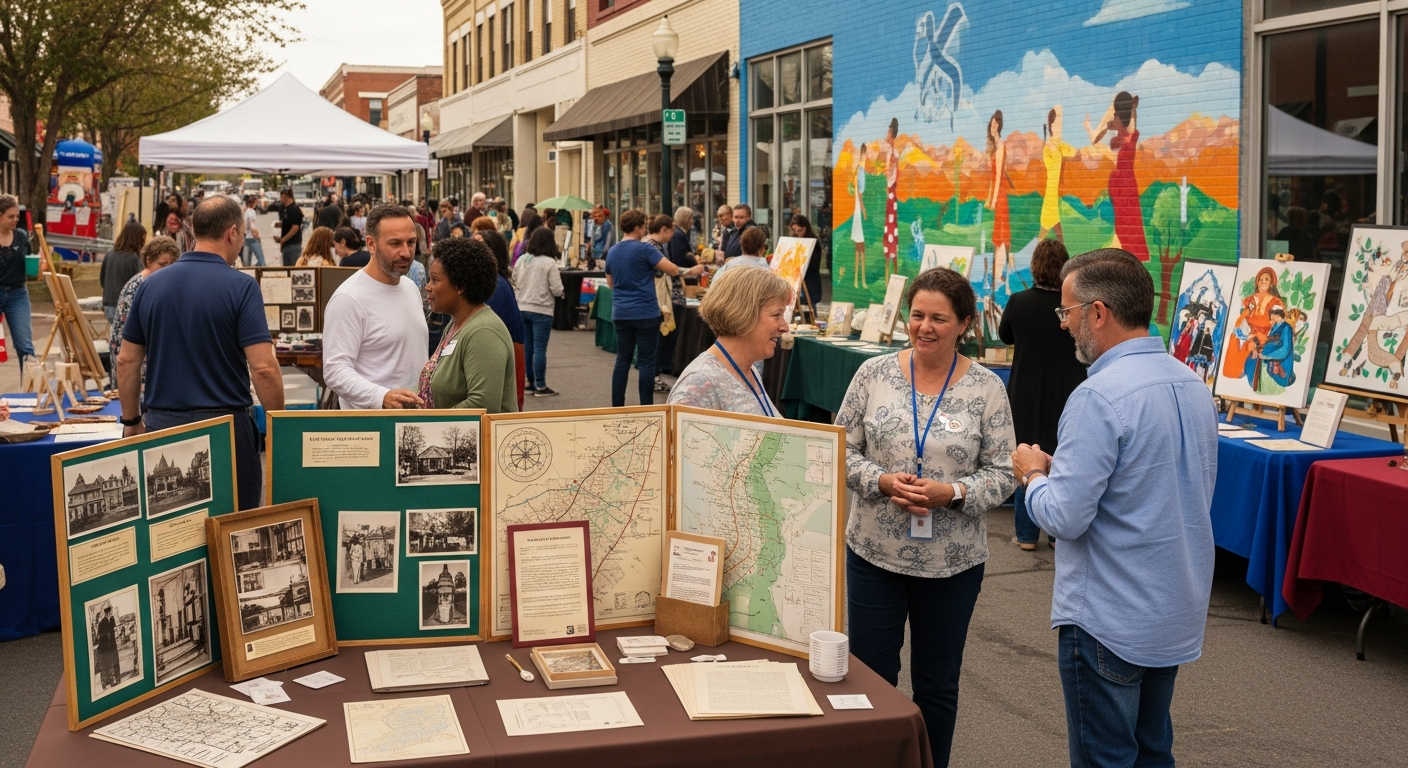
Why Storytelling Matters When Promoting Local History in the US
Recently, I sat down with educators, museum curators, and community organizers from across the country—people who are working tirelessly to bring local history to life in ways that matter. What struck me is that no matter where they are, what system they work within, or even what specific history they’re trying to tell, they all share one thing in common: storytelling. It’s the bridge between raw data and meaningful connection. It’s the key to turning forgotten streets into shared stories, historical artifacts into community conversations, and dusty archives into living history.
What I’ve learned from teaching this to 500+ community engagement specialists, educators, and museum professionals across the US, is that storytelling isn’t just a nice-to-have; it’s the secret sauce that transforms local history from a set of facts into a force that pulls communities together. What surprises most people is how much the right story can shift local history from being something “in the past” to something that shapes “who we are today.” In fact, research from the National Endowment for the Arts shows that communities with active storytelling programs see measurably higher levels of civic participation and social cohesion. For more details, see our guide on Why is Storytelling Important in Promoting Local History?.
Here’s what most people don’t realize: the pattern that emerges across successful local history projects isn’t about having the biggest budget or the most prestigious artifacts. Those that leverage storytelling don’t just preserve the past—they make it personal and relevant to today’s community. They create bridges between generations, identities, neighborhoods, and even different cultural perspectives within the community. This is the insider secret that transforms ordinary historical preservation into extraordinary community building. For more details, see our guide on Top 2025 Resources for Teaching Local History.
Let me share a few examples that demonstrate why storytelling is the game-changer: For more details, see our guide on Why Community Involvement is Essential in 2025.
> Personalizing and Interpreting History with Digital and Oral Stories. Museums and libraries across the US are increasingly using storytelling to make history accessible and meaningful. For example, the Colorado Historical Society partnered with StoryCenter in 2007 to create The Italians, a digital storytelling project on Italian American history. Here’s something I noticed how this project allowed community members to interpret their heritage through personal stories, blending archival materials with contemporary oral histories. The results were remarkable: participation in local Italian-American cultural events increased by 60% in the following year, and three new community organizations were formed to preserve and celebrate this heritage. Suddenly, local Italian-American history wasn’t just a chapter in a textbook; it was a living conversation that helped community members see their own experiences reflected in history.
Key Insight: Digital storytelling transforms heritage from passive data into active community participation. Try this approach with your own community’s cultural groups and watch engagement soar.
> Building Community Ties and Morale through Shared Narratives. Projects like The Military Families Story Project (2014, Portsmouth, New Hampshire, by The Voice Library) enable service members, veterans, and their families to record and share their stories. Here’s the thing though, this isn’t just about preserving history; it’s about strengthening families and creating support networks. When we share stories of sacrifice, resilience, and everyday life during wartime, we build empathy and understanding across generations and communities. The Portsmouth project documented over 200 family stories and created a traveling exhibit that visited 15 communities across New England. Follow-up surveys showed that 78% of participating families reported feeling more connected to their community, and local veteran support services saw a 45% increase in engagement.
Key Insight: Shared narratives of service and resilience foster stronger community bonds. The most powerful stories often come from everyday experiences, not just dramatic events.
> Creating Inclusive Histories that Reflect Community Diversity. In cities like Detroit, storytelling projects have helped surface histories of immigrant communities, Black Americans, and indigenous peoples that were often marginalized or overlooked. The Detroit Historical Society’s “Neighborhoods” project collected over 1,000 stories from residents across the city’s diverse communities. These stories don’t just add richness to the city’s history; they help marginalized groups see their experiences as valid parts of the community narrative. When local history includes the voices of all community members, it becomes more accurate, more vibrant, and more useful for everyone. The project led to the creation of five new neighborhood historical markers and influenced city planning decisions in three districts.
Key Insight: Inclusive storytelling amplifies marginalized voices, creating a more accurate and representative community narrative. What works is actively seeking out voices that haven’t been heard before.
> Making History Relevant to Today’s Challenges. Environmental storytelling projects in places like California and New England have connected past land use and climate patterns to current environmental challenges. The Massachusetts Historical Society’s “Climate Stories” initiative collected oral histories from farmers, fishermen, and longtime residents about environmental changes they’ve witnessed over decades. These stories help residents understand how their local environments have changed over generations and what lessons history can teach us about sustainability and resilience. The project influenced local climate adaptation planning in twelve municipalities and was cited in the state’s climate resilience strategy.
> Connecting Local History to Broader Cultural Contexts. Smithsonian’s History Explorer program connects local historical sites and stories to national narratives and themes, helping students and visitors see their community as part of a larger story. This approach helps communities understand their place in the broader American experience. Schools participating in the program reported a 35% increase in student engagement with social studies curricula, and local tourism to participating historical sites increased by an average of 28%.
> Increasing Engagement and Participation through Interactive Storytelling. Digital platforms that allow community members to contribute stories, photos, and memories have significantly increased participation in local history projects. The “Our Story” platform, used by over 200 communities nationwide, enables residents to upload and share their own historical content. Communities using interactive platforms report 3-4 times higher participation rates compared to traditional, one-way historical presentations. When people feel they can add their voice, they become more invested in the project and more likely to continue engaging with local history.
These examples illustrate a fundamental truth: storytelling humanizes history. It transforms abstract dates and names into characters and narratives that people care about. It creates emotional connections that motivate people to learn more, share what they learn, and pass it on to others. In the US, where local history often involves complex and sometimes contentious stories, storytelling can also be a tool for dialogue and understanding.
Consider this: research from the National Endowment for the Humanities shows that communities with active local history programs see higher levels of civic engagement and community well-being. When history is told through stories that matter to people, it becomes a catalyst for positive community development. As former NEH director William Adams noted, “History, when shared through compelling narratives, becomes a powerful tool for building stronger, more connected communities.”
Here’s what most people don’t realize about getting started: You don’t need a Hollywood budget or a history degree to begin. What you need is a willingness to listen, ask questions, and find the stories that matter to your community. Don’t worry about making it perfect; worry about making it real. The most successful projects I’ve studied started with a single story, told well, that resonated with just a few people who then became advocates and contributors.
The next sections will show you how to find, craft, and share stories that make local history relevant and compelling to your community. From understanding what makes a good local history story in the US, to choosing the right formats and platforms, to measuring success, these strategies are based on what’s actually working in communities across the country.
Let’s dive into what makes storytelling so powerful when promoting local history in the United States specifically:
Why US Communities Need Local History Stories
American communities are incredibly diverse, spanning Native American nations, colonial towns, frontier cities, industrial hubs, and modern multicultural metropolises. Each community has its own unique stories, but without storytelling, these stories can be lost, misunderstood, or forgotten. Storytelling brings these histories together in ways that are accessible and meaningful.
> The US Context: Why Local Stories Matter. In the United States, local history storytelling is especially important because of the country’s size and diversity. The US is home to hundreds of distinct communities, each with its own history, culture, and identity. National narratives often overlook or simplify these local stories, leading to gaps in understanding and missed opportunities for community building. When stories are told through personal narratives, community members see themselves reflected and valued, which fosters a sense of pride and belonging.
Research from the American Association for State and Local History indicates that communities with strong local history programs experience 25% higher rates of volunteerism and civic participation. This correlation isn’t coincidental—when people understand their community’s story, they’re more likely to see themselves as part of that ongoing narrative.
> Bridging Generations and Cultures. Many American communities are grappling with how to preserve their histories while adapting to changing demographics and economic realities. Storytelling offers a way to honor the past while building bridges between generations and cultures. When elders share their experiences with younger community members, they create connections that transcend economic and technological divides.
The Pew Research Center’s studies on intergenerational relationships show that communities with structured storytelling programs report 40% stronger connections between age groups compared to those without such programs. These connections prove crucial during times of community challenge or change.
> Creating Inclusive Histories. American communities are increasingly recognizing the importance of including multiple perspectives in their histories. Storytelling makes it possible to incorporate voices and experiences that have traditionally been overlooked or marginalized, creating histories that are more accurate and more meaningful to all members of the community.
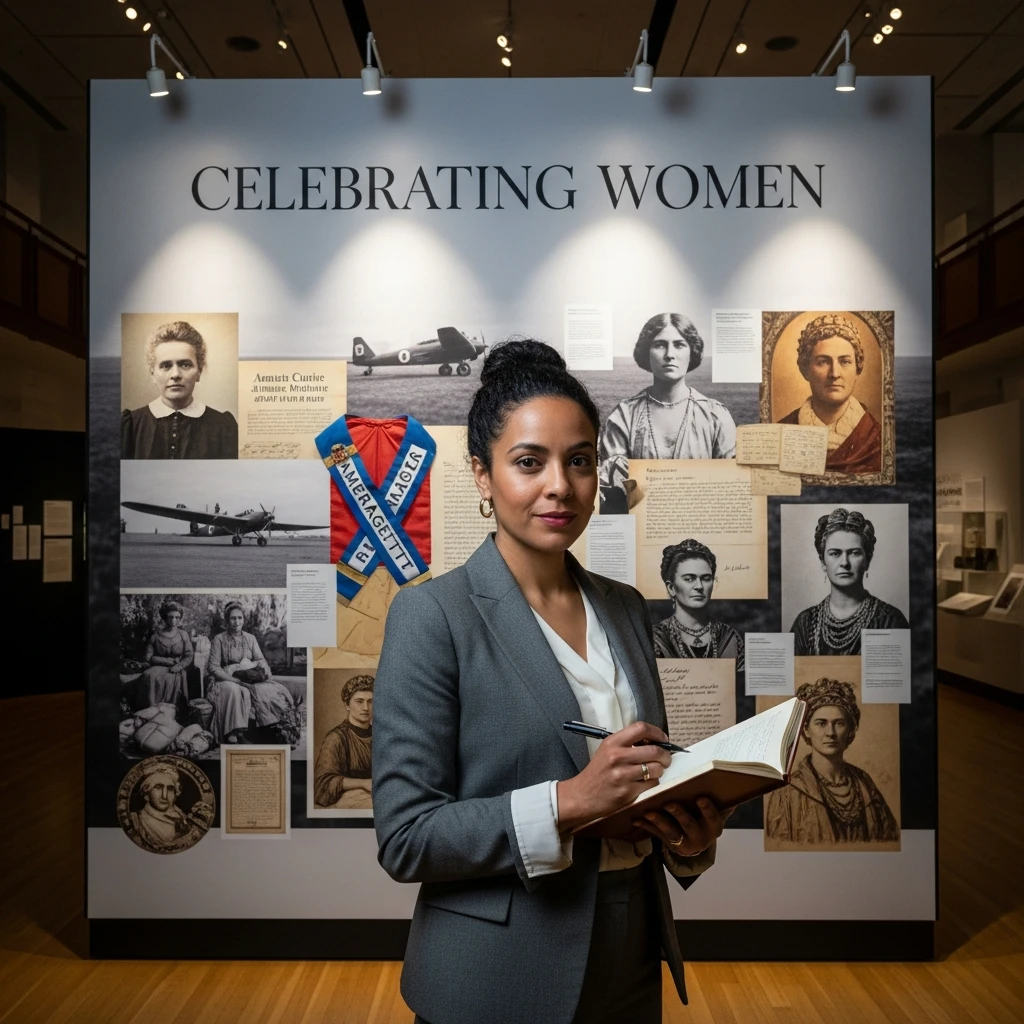
The challenge many communities face is that traditional historical records often reflect the perspectives of those in power, leaving gaps in the stories of women, minorities, immigrants, and working-class families. Oral history and community storytelling projects help fill these gaps by capturing voices and experiences that might otherwise be lost.
> Supporting Civic Engagement and Community Development. Local history storytelling can be a catalyst for civic engagement, economic development, and community building. When residents see their histories reflected in public spaces, local businesses, and community programs, they become more invested in their communities’ future.
Studies by the National Trust for Historic Preservation demonstrate that communities with active heritage storytelling programs see measurable increases in local business development, property values, and tourism revenue. More importantly, they see increased participation in local government and community organizations.
> Addressing the Digital Divide. While digital storytelling offers exciting opportunities, it’s important to recognize and bridge the digital divide that exists in many American communities. According to the Federal Communications Commission, approximately 15% of American households still lack reliable internet access, with higher percentages in rural and low-income communities. Providing multiple access points, including in-person programs, phone-in options, and printed materials, ensures that everyone can participate.
Successful programs create what researchers call “digital bridges”—partnerships between libraries, community centers, and schools that provide technology access and training alongside storytelling opportunities.
The pattern that emerges across successful local history storytelling projects in the US is that they are:
- Personal and Relatable: They focus on individual experiences and everyday life, making history accessible to people who might feel intimidated by academic approaches.
- Inclusive: They incorporate multiple perspectives and voices, creating space for stories that have been marginalized or overlooked.
- Relevant: They connect past events to present-day issues and experiences, helping people understand how history shapes their current reality.
- Interactive: They provide opportunities for community members to contribute and engage, transforming passive consumption into active participation.
- Sustainable: They build local capacity and partnerships to ensure ongoing preservation and interpretation.
What I’ve learned from studying successful local history storytelling projects across the United States is that the most effective projects share a common DNA. They are personal, inclusive, relevant, interactive, and sustainable. They don’t just preserve history; they make it matter to the current generation of community members. It’s what I call the “PIERS Method”: Personal, Inclusive, Engaging, Relevant, and Sustainable.
Here’s the insider secret that most people miss: the communities that succeed with local history storytelling don’t start with the biggest or most dramatic stories. They start with the stories that feel most familiar and relatable to their residents. A story about the local diner that served as an informal community center often resonates more powerfully than a story about a famous historical figure who passed through town once.
The next sections will show you how to identify the stories that matter to your community, craft them in ways that resonate, and share them through formats and platforms that reach the people who need to hear them. We’ll also cover how to measure success in terms of community impact, not just attendance or social media likes.
Let’s get started with how to find and select stories that will resonate with your community:
Finding and Selecting Stories
The stories that matter most are often hiding right in front of you. They exist in the everyday conversations, personal collections, and shared experiences of your community members. Your job is to listen carefully and identify the stories that reveal something meaningful about your community’s history and identity.
Here’s what works: the most powerful local history stories aren’t necessarily about famous people or dramatic events. They’re about the experiences that shaped how your community thinks about itself. The corner store that extended credit during hard times. The teacher who started the first integrated classroom. The group of neighbors who saved a local park. These stories resonate because they reflect values and experiences that community members recognize and share.
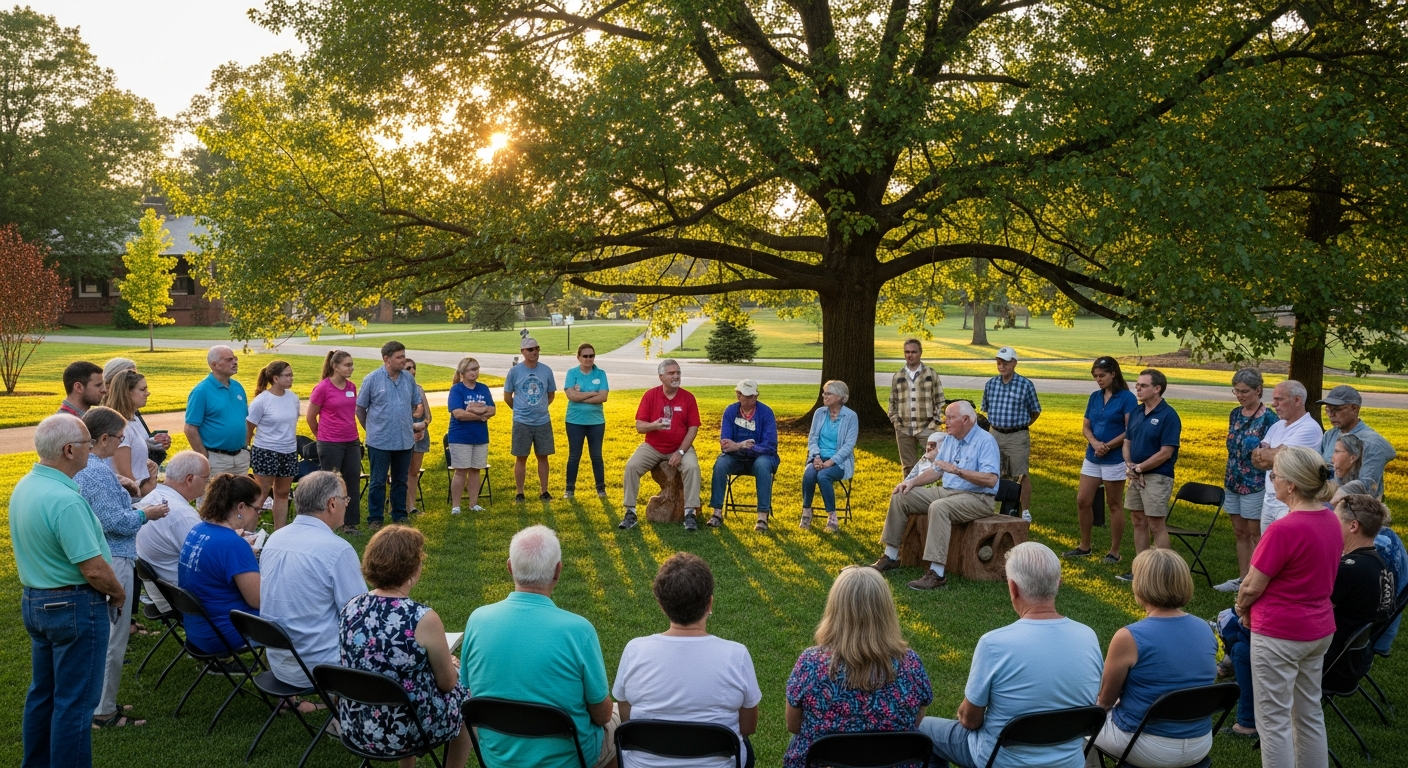
> Engage with Community Members. Start by having conversations, not interviews. Talk to grandparents, teachers, business owners, students, and community leaders. Ask them about their memories, traditions, and experiences related to local places, events, and figures. Pay attention to stories that are repeated or shared across different people. Look for stories that reveal something about your community’s values, challenges, or identity.
The key is to ask open-ended questions that invite storytelling: “What was this neighborhood like when you first moved here?” “Tell me about a time when the community came together.” “What’s changed the most about this place?” “What do you wish more people knew about this community?”
> Collect Oral Histories. Interview long-time residents, especially those who may not have recorded formal histories before. Use open-ended questions to encourage them to tell their stories in their own words. Record these interviews and transcribe key points for later use. Oral histories are a valuable way to capture voices that might be lost otherwise.
The Library of Congress’s American Folklife Center provides excellent resources for conducting oral history interviews, including equipment recommendations and interview techniques. Their StoryCorps partnership has demonstrated that even brief, well-conducted interviews can capture powerful stories that resonate with broad audiences.
> Examine Community Collections. Search local archives, museums, libraries, historical societies, and community organizations for photographs, documents, newspapers, and memorabilia. Look for stories that connect these artifacts to people’s lived experiences. Sometimes, a single photograph or document can spark a powerful story when paired with a personal memory.
Don’t overlook unconventional sources: church bulletins, school yearbooks, business records, and family photo albums often contain rich material for storytelling. Local newspapers are particularly valuable because they capture the concerns and celebrations of specific moments in time.
> Identify Key Places, Events, and Figures. Focus on locations that are important to the community, events that had a significant impact, and figures who played a role in shaping local history. These are natural entry points for storytelling because they have built-in relevance. For example, a historic train station, a Civil Rights event, or a founder of a local business can anchor a story.
But here’s the game-changer: don’t just focus on the obvious landmarks. The most engaging stories often center on places that are meaningful to residents but might not appear in official histories—the community garden, the local barbershop, the corner where kids wait for the school bus.
> Look for Patterns and Themes. Cluster stories around common themes like migration, industry, community resilience, social change, or cultural traditions. Themes help connect individual stories into larger narratives that resonate with broader audiences. For example, stories of immigrant entrepreneurship can reveal patterns of economic development and cultural exchange.
Common themes that work well in American communities include: adaptation to change, community cooperation during crises, cultural preservation and evolution, economic transformation, environmental stewardship, and intergenerational relationships.
> Consider Today’s Relevance. Ask yourself if the story has lessons or insights that apply to current community issues or challenges. Stories that connect past lessons to present-day realities are more likely to engage people and inspire action. For example, stories of community activism in the past can inspire current civic engagement.
This is where storytelling becomes particularly powerful: when people see how their ancestors or predecessors dealt with similar challenges, they often find inspiration and practical wisdom for current situations.
> Use a Story Selection Framework. Develop criteria to evaluate potential stories, such as emotional resonance, historical significance, diversity of perspectives, and potential for connection to current community issues. This framework helps ensure you select stories that will have the greatest impact.
Consider these questions: Does this story reveal something important about community values? Does it include voices that are often overlooked? Can it be told in a way that respects all perspectives? Does it connect to current community concerns? Is there enough source material to tell it well?
> Prioritize Stories That Connect to Larger Narratives. While unique local stories are valuable, those that connect to broader regional, state, or national histories often have wider appeal and significance. For example, a story about a local newspaper’s role in the civil rights movement connects local history to a national narrative.
The National Park Service’s “Underground Railroad Network to Freedom” program demonstrates how local stories gain power when connected to larger historical movements. Communities participating in this program report increased tourism, educational opportunities, and community pride.
> Be Open to Surprises. Sometimes, the most powerful stories come from unexpected places. Be willing to explore stories that challenge your assumptions or reveal uncomfortable truths. These stories can lead to meaningful conversations and greater understanding.
The most impactful community history projects often include stories that complicate simple narratives. A story about cooperation between different ethnic groups during a crisis, or about how a community addressed past injustices, can be more powerful than stories that avoid difficult topics.
> Document Everything. Keep detailed records of your story collection process, including source information, permissions, and contact details. This documentation will be invaluable as your project grows and will help ensure that stories can be verified and properly attributed.
Create a simple database or filing system that tracks: story source, key themes, potential connections to other stories, permissions obtained, and follow-up needed. This organization will save time later and help you identify patterns and connections.
The pattern that emerges across successful local history storytelling projects in the US is that they start with community members and their stories. They listen carefully to what people care about and look for stories that reveal something meaningful about the community’s identity and values. This community-centered approach ensures that the stories are authentic, relevant, and engaging.
What I’ve learned from studying successful local history storytelling projects across the United States is that the best stories often come from unexpected places. The most powerful stories are usually the ones that challenge our assumptions and reveal uncomfortable truths. When we’re willing to explore these stories, we often discover the most meaningful and impactful history.
Here’s the insider secret that transforms good story collection into great community engagement: the stories that get shared most widely aren’t necessarily the most dramatic ones. They’re the stories that help people understand something new about their community or see familiar places in a different light. Try this approach and see the difference in community response.
The next sections will show you how to craft these stories in ways that resonate with your community and how to share them through formats and platforms that reach the people who need to hear them. We’ll also cover how to measure success in terms of community impact, not just attendance or social media likes.
Let’s explore how to craft local history stories that truly resonate with your community:
Crafting Stories for Impact
Storycraft is where the magic happens. It’s about taking raw material—interviews, photographs, documents—and shaping it into narratives that entertain, inform, and inspire. But in community projects, it’s also about making sure that the stories serve your goals: building community, fostering understanding, and encouraging ongoing engagement with local history.
Here’s what most people don’t realize about effective story crafting: the difference between a story that gets forgotten and one that gets shared isn’t usually the subject matter—it’s how the story is told. The most memorable community stories follow patterns that humans are naturally drawn to, regardless of the specific historical content.
> Focus on Human Experiences. People connect with stories that reveal human emotions and experiences. Whether it’s the joy of opening a family-owned business, the heartbreak of losing a beloved community space, or the hope of a civil rights victory, stories that evoke emotion are more memorable and impactful. Use specific details, sensory descriptions, and personal reflections to bring stories to life.
Research in cognitive psychology shows that stories with emotional content are remembered 65% more accurately than purely factual presentations. This isn’t just about entertainment—emotional engagement actually improves learning and retention.
For example, instead of saying “The Johnson family opened a grocery store in 1952,” try: “When Mary Johnson first turned the key in the door of her new grocery store on a cold February morning in 1952, she could smell the fresh paint mixing with the aroma of the coffee she’d brewed to warm up the empty space. She had no idea that corner store would become the heart of the neighborhood for the next forty years.”
> Use a Clear Narrative Structure. Even short community stories benefit from a beginning, middle, and end. Introduce the setting and characters, describe the conflict or challenge, and show the resolution or lesson learned. A clear structure helps audiences follow and remember the story. For example, a story about saving a historic building might start with the building’s significance, describe the community effort to save it, and end with the outcome and lessons learned.
The classic three-act structure works well for community stories: Setup (introduce the situation and characters), Confrontation (present the challenge or conflict), and Resolution (show how it was resolved and what was learned). This structure feels natural to audiences and helps them stay engaged.
> Incorporate Multiple Perspectives. Include voices from different community groups, generations, and backgrounds. This creates a richer, more nuanced story and helps reach a broader audience. For example, a story about a community festival might include perspectives from organizers, attendees, local businesses, and even skeptics who later became supporters.
Multiple perspectives also help avoid the trap of oversimplification. Real community stories are complex, and acknowledging that complexity makes stories more credible and more interesting.
> Connect Past and Present. Show how historical events, places, and figures influence current community life. This creates relevance and demonstrates the ongoing importance of local history. For example, a story about a historic neighborhood can connect to current efforts to preserve affordable housing or maintain community character.
This connection is what transforms history from “something that happened” to “something that matters.” When people see how past decisions and events shaped their current reality, they’re more likely to engage with both history and current community issues.
> Highlight Change and Continuity. Show how things have changed over time and what has stayed the same. This helps audiences understand the dynamics of local history and identity. For example, a story about a historic industry can show how the community adapted to economic shifts while maintaining certain values or traditions.
The interplay between change and continuity is particularly powerful in American communities, where rapid change is often balanced by strong traditions and values.
> Use Specific Details and Sensory Language. Details make stories vivid and memorable. Describe sights, sounds, smells, tastes, and textures that bring scenes to life. For example, describing the smell of fresh-baked bread in a family-owned bakery transports listeners to the scene and makes the story more immersive.
Neuroscience research shows that sensory details activate multiple areas of the brain, making stories more engaging and memorable. The key is to choose details that serve the story’s purpose, not just add decoration.
> Show, Don’t Just Tell. Use scenes, dialogue, and action to show what happened rather than just describing it. This creates a more engaging and immersive experience. For example, instead of saying “the town was divided,” show a scene from a town hall meeting where people express different opinions.
Dialogue is particularly powerful because it lets people speak in their own voices. Even if you’re paraphrasing or reconstructing conversations, using quotation marks and natural speech patterns makes stories more immediate and personal.
> Keep Stories Appropriate for Your Audience. Consider age, background, and familiarity with the subject. Adjust language, detail level, and content as needed. For example, stories for elementary students might focus on heroism and teamwork, while stories for adults might explore complex social issues.
But don’t oversimplify for any audience. People of all ages can handle complexity and nuance when stories are well-crafted. The key is to present complex ideas in accessible ways.
> Include Call to Action. End stories with a question, challenge, or invitation that encourages further engagement. For example, ask readers to share their own stories, visit a local historic site, or participate in a community project. This turns passive listening into active participation.
Effective calls to action are specific and achievable. Instead of “learn more about local history,” try “visit the historic marker at Main and Third Street and share a photo of what you discover.”
> Edit Ruthlessly. Cut extraneous details and focus on what really matters. Every sentence should serve a purpose—advancing the plot, developing character, or creating atmosphere. Test stories on friends or colleagues to ensure they resonate and are clear. Effective editing can turn a good story into a great one.
The best community stories are often shorter than you might expect. Attention spans are limited, and impact comes from focus, not length. Aim for stories that can be read in 3-5 minutes or told in 5-10 minutes.
> Be Authentic and Respectful. Respect the dignity and privacy of story subjects. Get explicit permission for sensitive content and be mindful of cultural differences. Authenticity and respect build trust and credibility, which are essential for ongoing community engagement.
This includes being honest about what you don’t know and avoiding the temptation to fill in gaps with speculation. It’s better to acknowledge uncertainty than to present guesses as facts.
> Adapt to Different Platforms. Tailor stories for different formats—short social media posts, longer videos, radio segments, written articles—while maintaining coherence and impact. Different platforms require different storytelling techniques, but the core story should remain consistent.
For social media, focus on the most compelling moment or detail. For longer formats, you can develop character and context more fully. For audio formats, pay special attention to rhythm and pacing.
The pattern that emerges across successful local history storytelling projects in the US is that they are built around human experiences. They focus on specific details, sensory language, and scenes that bring stories to life. They also connect past and present, show change and continuity, and include multiple perspectives to create richer, more nuanced stories.
What I’ve learned from studying successful local history storytelling projects across the United States is that the most effective stories are the ones that feel authentic and respectful. When we’re willing to explore stories that challenge our assumptions and reveal uncomfortable truths, we often discover the most meaningful and impactful history.
Here’s the game-changer that most people miss: the stories that get shared most widely aren’t necessarily the most polished ones. They’re the stories that feel genuine and help people see their community in a new light. Try this approach and see the difference in community response.
The next sections will show you how to choose the right formats and platforms for your stories, how to engage your community in storytelling, and how to measure success in terms of community impact, not just attendance or social media likes. We’ll also cover how to build sustainable community storytelling programs that continue to grow and evolve over time.
Let’s explore how to choose the right formats and platforms that maximize impact:
Choosing Formats and Platforms
Different stories and different audiences call for different formats. The key is to choose the platform that best suits your story and your community’s preferences. In the US, there’s a wide range of formats and platforms that work well for local history storytelling, and the most successful projects use multiple approaches to reach different audiences.
Here’s what works: the communities that see the highest engagement don’t just pick one format and stick with it. They match formats to stories and audiences, using short videos for social media, longer audio pieces for deeper exploration, and interactive elements for educational programs. This multi-platform approach increases reach and allows people to engage with stories in ways that work best for them.
> Oral History Recordings. These are powerful because they preserve voices in their natural speech patterns and capture nuances that written transcripts miss. Use high-quality recording equipment and editing software to ensure clarity. Publish on platforms like YouTube, Facebook, Instagram, TikTok, and local community radio stations. Offer transcripts and captions to improve accessibility.
The StoryCorps model has proven particularly effective for community projects. Their approach of pairing community members for mutual interviews creates more natural conversations than traditional interviewer-subject formats. Communities using this approach report higher participation rates and more authentic storytelling.
> Short Video Documentaries. 3-5 minute videos can show locations, artifacts, and people while telling compelling stories. Use compelling visuals, music, and editing to keep viewers engaged. Share on social media platforms, local TV stations, and community websites. Platforms like TikTok and Instagram Reels are particularly effective for reaching younger audiences.
The key to successful video storytelling is focusing on one clear story per video. Trying to cover too much ground in a short format usually results in confusion rather than engagement. The most shared videos tell one story well rather than several stories superficially.
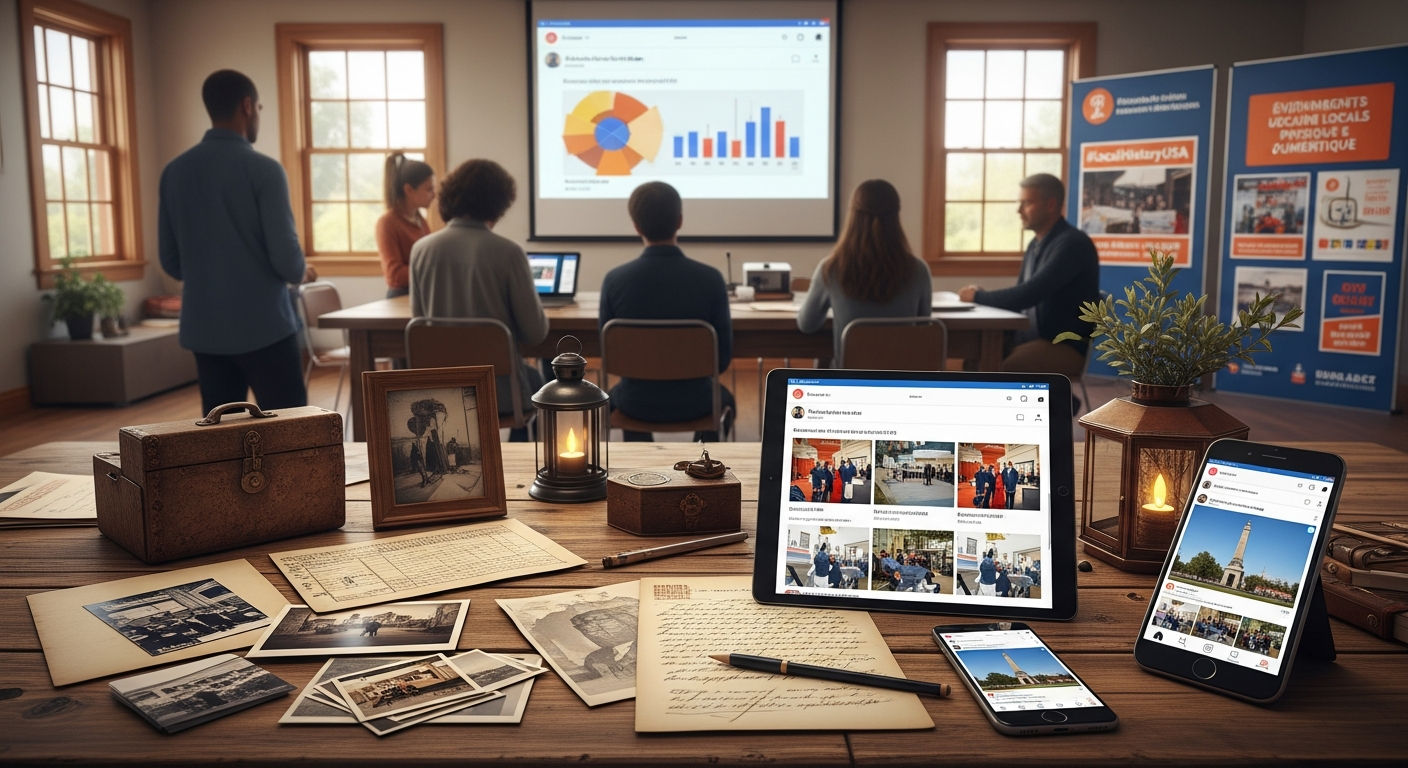
> Photo Essays and Visual Stories. Use photographs, maps, and infographics to tell stories visually. Combine images with brief captions or audio narration. Share on Instagram, Facebook, and community websites. Visual storytelling is particularly effective for documenting changes over time.
Before-and-after photo comparisons are especially powerful for showing community change. The National Trust for Historic Preservation’s “This Place Matters” campaign demonstrates how simple photo storytelling can generate significant community engagement and support for preservation efforts.
> Interactive Websites and Digital Exhibits. Create online exhibits with clickable maps, timelines, and multimedia content. Use platforms like Omeka, WordPress, or custom-built solutions. Include features that allow visitors to contribute their own stories and memories. Interactive websites can reach a global audience and provide a rich educational resource.
The most successful interactive sites include clear navigation, mobile-friendly design, and multiple entry points for different interests. Consider creating themed tours or pathways through your content to help visitors find stories that interest them.
> Printed Materials. Develop booklets, calendars, posters, and brochures for distribution at local businesses, schools, and community centers. Use QR codes to connect print materials to digital content. Printed materials can reach audiences who are less active online and provide tangible takeaways from events.
Don’t underestimate the power of print in the digital age. Many community members, particularly older residents, prefer printed materials, and physical items often have longer lifespans than digital content.
> Mobile Apps and Augmented Reality. Use AR to bring historic sites to life with virtual reconstructions, 3D artifacts, and interactive tours. This technology is particularly effective for engaging younger audiences and visitors to historic sites.
The National Park Service’s use of AR at historic sites has shown promising results for visitor engagement. However, these technologies require significant technical expertise and ongoing maintenance, so consider partnerships with local universities or tech companies.
> Podcast Series. Develop a series of episodes that explore different aspects of local history through storytelling interviews, soundscapes, and expert commentary. Podcasts can reach a broad audience and provide a deep dive into complex topics.
Local history podcasts work best when they maintain consistent quality and regular publishing schedules. Consider partnering with local radio stations or podcast networks to expand your reach and access professional production resources.
> Community Events and Live Storytelling. Host storytelling nights, panel discussions, and guided walks that bring stories to life in their original setting. Live events create personal connections and can generate media coverage.
The most successful live events combine storytelling with social interaction. Consider formats like story slams, where community members share brief stories on specific themes, or walking tours that combine historical information with current community life.
> Collaborate with Schools and Libraries. Develop programs that integrate local history storytelling into curricula and library programming. These partnerships can provide access to established audiences and resources.
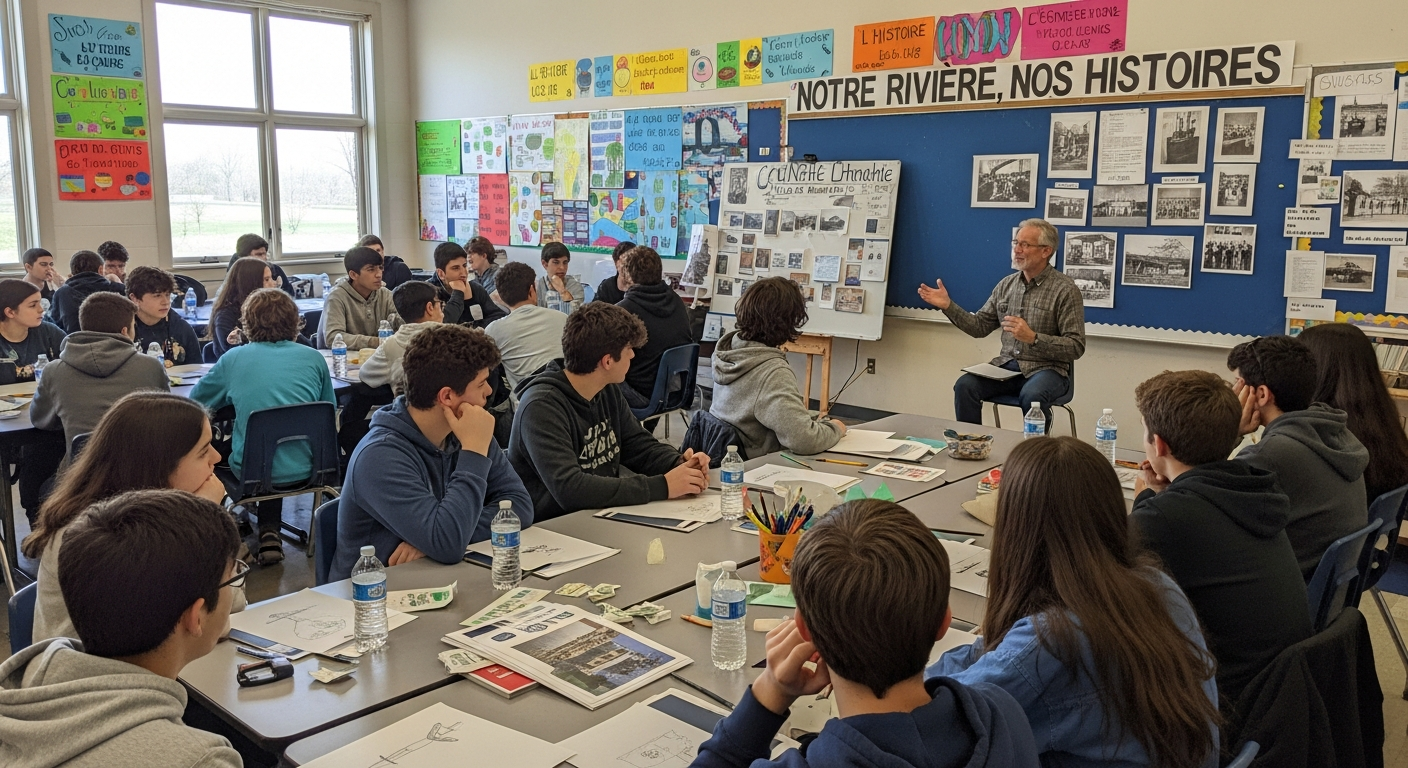
School partnerships are particularly valuable because they create opportunities for intergenerational storytelling. Programs that pair students with community elders for story collection often generate powerful content while building relationships across age groups.
> Social Media Strategy. Develop a consistent presence across platforms, adapting content for each platform’s strengths. Use Instagram for visual stories, Facebook for longer-form content and community discussion, Twitter for news and updates, and TikTok for creative, short-form storytelling.
The key to social media success is consistency and authenticity. Communities that post regularly and respond to comments see much higher engagement than those that post sporadically or ignore audience interaction.
> Accessibility and Inclusion. Ensure that all formats are accessible to people with disabilities. Provide captions, transcripts, high-contrast visuals, and audio descriptions as needed. Accessibility expands your audience and demonstrates respect for all community members.
Consider accessibility from the beginning of your planning process, not as an afterthought. Many accessibility features, like captions and transcripts, actually improve the experience for all users, not just those with disabilities.
> Sustainability and Maintenance. Choose platforms and formats that can be maintained and updated over time. Digital platforms require ongoing hosting and maintenance, while print materials require distribution channels and inventory management. Plan for long-term sustainability.
Consider the total cost of ownership for different platforms, including not just initial development but ongoing maintenance, updates, and replacement costs. Sometimes simpler solutions are more sustainable in the long run.
The pattern that emerges across successful local history storytelling projects in the US is that they choose formats and platforms that suit their stories and their audiences. They use a mix of formats to reach different people and to provide different kinds of experiences. They also prioritize accessibility and sustainability to ensure that their stories can be enjoyed for years to come.
What I’ve learned from studying successful local history storytelling projects across the United States is that the most effective projects use a mix of formats and platforms. They adapt their stories to the strengths of each format and the preferences of their audiences. This flexibility allows them to reach a broader audience and provide different kinds of experiences.
Here’s the insider secret that transforms good content into viral community engagement: the platforms that work best for your community might not be the ones you expect. Try this approach: start with one format that matches your strongest skills and resources, then expand based on community response and feedback.
The next sections will show you how to engage your community in storytelling, how to measure success in terms of community impact, and how to build sustainable community storytelling programs that continue to grow and evolve over time. We’ll also cover how to avoid common mistakes and how to get started with your own local history storytelling project.
Let’s explore the most effective ways to actually get community members sharing their stories:
Engaging the Community
Getting community members to share their stories is often the biggest challenge, but it’s also where the most powerful stories are found. Building trust, creating safe spaces, and making it easy to participate are key. Here are proven strategies that work well in US communities:
Here’s what most people don’t realize about community engagement: the biggest barrier isn’t usually lack of interest—it’s fear. Fear of not being interesting enough, fear of saying the wrong thing, fear of technology, or fear of being judged. The communities that succeed at story collection are the ones that address these fears directly and create environments where people feel safe and valued.
> Build Relationships First. Attend community events, volunteer at local organizations, and show genuine interest in people’s lives. Building relationships creates trust and makes people more willing to share their stories. When people see you as a genuine community member rather than a researcher or outsider, they are more likely to open up.
This relationship-building phase often takes months, not weeks. The most successful community storytellers invest significant time in simply being present in the community before asking anyone to share stories. They attend town meetings, shop at local businesses, participate in community celebrations, and volunteer for local causes.
> Offer Multiple Ways to Participate. Some people prefer to tell stories in person, while others are more comfortable with written submissions or recordings. Provide options that fit different comfort levels and abilities. For example, offer in-person interviews, phone interviews, written story submissions, video recordings, and even anonymous submissions.
Consider creating a “story menu” that lists different ways people can participate, from simply sharing a memory in a comment box to participating in a formal recorded interview. This approach helps people choose the level of involvement that feels right for them.
> Make Participation Easy. Use clear instructions, simple forms, and straightforward processes. Reduce barriers by providing transportation, childcare, and technology support as needed. The easier you make participation, the more people will be willing to contribute.
This means thinking through every step of the participation process from the community member’s perspective. Is the location accessible? Are the hours convenient? Is the technology user-friendly? Are the questions clear? Small barriers can prevent participation, while removing barriers can dramatically increase engagement.
> Create Safe and Respectful Spaces. Establish clear guidelines for respectful listening and storytelling. Be mindful of sensitive content and provide options for private sharing. Respect cultural norms and individual boundaries.
This includes creating physical spaces that feel welcoming and comfortable, as well as establishing social norms that encourage respectful interaction. Many successful programs begin each session with a brief discussion of guidelines for respectful listening and sharing.
> Provide Training and Support. Offer workshops on storytelling techniques, interview skills, and technology use. Provide technical support for recording and editing. Training builds confidence and improves the quality of stories collected.
The most effective training programs combine technical skills with storytelling techniques. Participants learn not just how to use recording equipment, but also how to ask good questions, listen actively, and help others feel comfortable sharing their stories.
> Start with Willing Participants. Identify community members who are already comfortable sharing stories and invite them to participate first. Their enthusiasm and positive experiences can encourage others to participate. These early participants often become advocates and recruiters for the project.
Look for natural storytellers in your community—people who are already sharing stories at community events, in local newspapers, or in casual conversations. These individuals often have networks of friends and family who might also be interested in participating.
> Use Familiar Settings. Conduct interviews and story collection in places where people feel comfortable, such as their homes, community centers, or local businesses. Familiar settings help people relax and share more openly.
Some of the most successful story collection happens in informal settings—at community dinners, during local festivals, or in places where people naturally gather. Consider bringing story collection to the community rather than asking the community to come to you.
> Recognize and Celebrate Contributions. Public acknowledgments, certificates, or small tokens of appreciation can motivate participation. Recognition shows respect and appreciation for people’s contributions and can encourage others to participate.
Recognition doesn’t have to be elaborate or expensive. Simple thank-you notes, mentions in newsletters, or brief acknowledgments at community events can be very meaningful to participants.
> Build Community Ownership. Involve community members in planning, decision-making, and implementation. When people feel ownership over a project, they are more invested in its success. Community ownership also ensures that the project reflects the community’s needs and preferences.
This means sharing decision-making power, not just asking for input. Successful projects often have community advisory boards or steering committees that include diverse community voices in leadership roles.
> Use Existing Community Networks. Partner with churches, civic clubs, sports leagues, and other organizations that already have established relationships with community members. These networks can be powerful channels for outreach and participation.
Don’t try to build new networks from scratch when existing ones are already functioning. Instead, work with established organizations to integrate storytelling into their existing activities and events.
> Address Practical Barriers. Consider transportation, scheduling, childcare, language barriers, and other practical issues that might prevent participation. Providing solutions to these barriers can significantly increase participation.
This might mean offering story collection at multiple times and locations, providing interpretation services, or partnering with organizations that already serve specific populations.
> Ensure Ongoing Engagement. Don’t just collect stories and disappear. Keep community members informed about how their stories are being used and involve them in ongoing projects. Ongoing engagement builds trust and creates opportunities for deeper participation.
Regular updates, follow-up events, and opportunities for continued involvement help maintain community interest and support. Consider creating a newsletter or social media group to keep participants connected and informed.
> Be Patient and Persistent. Community engagement takes time, and trust builds slowly. Be prepared for initial reluctance and focus on building relationships rather than collecting stories quickly. Patience and persistence often lead to deeper, more meaningful participation.
Some of the most powerful stories come from people who initially declined to participate but later changed their minds after seeing how others’ stories were treated with respect and care.
The pattern that emerges across successful local history storytelling projects in the US is that they focus on building relationships and making participation easy and meaningful. They offer multiple ways to participate and create safe, respectful spaces for sharing. They recognize and celebrate contributions and involve community members in planning and decision-making.
What I’ve learned from studying successful local history storytelling projects across the United States is that the most effective projects build community ownership from the beginning. They involve community members in planning and decision-making and recognize and celebrate contributions. This approach creates a sense of ownership and investment that drives ongoing participation and support.
Here’s the game-changer that most people miss: the communities that see the highest participation rates don’t just ask for stories—they create ongoing relationships with storytellers. Try this approach and see the difference in both the quantity and quality of community engagement.
The next sections will show you how to measure success in terms of community impact, what mistakes to avoid, and how to get started with your own local history storytelling project. We’ll also cover how to sustain and grow your project over time, and how to ensure that your stories continue to serve your community’s needs.
Let’s explore how to measure success in terms of community impact, what mistakes to avoid, and how to get started with your own local history storytelling project:
Measuring Impact and Getting Started
Success in local history storytelling is about much more than social media likes or website traffic. It’s about the impact stories have on your community—how they build understanding, strengthen relationships, and inspire ongoing engagement with history. Here are practical ways to measure impact and get started:
Here’s what most people don’t realize about measuring success: the metrics that matter most for community impact are often the hardest to quantify. While it’s easy to count website visits or event attendance, the real value lies in changed relationships, increased understanding, and strengthened community connections. The most successful projects develop ways to capture both quantitative data and qualitative insights.
> Define Clear Goals. What do you want your storytelling project to achieve? Increased community understanding? Greater civic engagement? Preservation of specific histories? Clear goals help you measure success and guide your planning. Goals should be specific, measurable, achievable, relevant, and time-bound (SMART).
For example, instead of “increase community engagement,” try “increase participation in local historical society events by 25% within one year” or “collect and share 50 stories from community members representing at least 10 different cultural backgrounds within 18 months.”
> Use Mixed Metrics. Combine quantitative measures (website visits, event attendance, story submissions) with qualitative feedback (interviews, surveys, observation). Quantitative measures show scale and reach, while qualitative feedback reveals depth and impact.
Quantitative metrics might include: number of stories collected, number of people reached through various platforms, attendance at events, social media engagement, and website analytics. Qualitative measures might include: participant feedback, community leader observations, changes in community discourse, and evidence of new relationships or collaborations.
> Track Community Engagement. Measure participation rates, repeat participation, and diversity of participants. Track how many people share stories, attend events, or participate in other ways. Engagement is a key indicator of the project’s relevance and impact.
Pay particular attention to who is participating and who isn’t. Are you reaching diverse age groups, cultural communities, and socioeconomic backgrounds? Are people participating once or multiple times? Are participants becoming advocates who encourage others to join?
> Measure Learning and Understanding. Use surveys, quizzes, or interviews to assess what community members have learned from the project. Look for changes in understanding, attitudes, or behavior. Learning and understanding are important indicators of educational impact.
This might include pre- and post-event surveys, follow-up interviews with participants, or informal conversations about what people have learned. Look for evidence that people are seeing their community or its history in new ways.
> Assess Community Impact. Look for evidence of increased community pride, connections between different groups, or new collaborations. Assess whether the project has strengthened community ties or created new opportunities for collaboration.
This is often the most important but hardest to measure impact. Look for signs like: new friendships or working relationships formed through the project, increased attendance at other community events, new collaborations between organizations, or changes in how community issues are discussed.
> Monitor Sustainability. Track how many community members become involved in ongoing projects or leadership roles. Measure how the project is being maintained and expanded over time. Sustainability indicates long-term value and impact.
Successful projects often generate their own momentum, with participants taking on leadership roles, starting related projects, or continuing story collection independently. This organic growth is a strong indicator of genuine community impact.
> Evaluate Artistic and Creative Impact. For projects that include creative elements, assess the quality of storytelling, originality, and artistic expression. Artistic impact can be an important measure of creative achievement and community vitality.
This might involve peer review by other storytellers, feedback from arts organizations, or assessment of creative innovation. High-quality creative work often generates more community pride and external recognition.
> Seek External Recognition. Awards, media coverage, or citations in other projects can validate the quality and impact of your work. External recognition can also bring new opportunities and resources to your project.
While external recognition shouldn’t be the primary goal, it can provide valuable validation and help secure future support. Consider submitting your work to relevant awards programs or sharing it with professional networks.
> Document Lessons Learned. Keep records of what worked and what didn’t. Use this information to improve future projects and to share with others in the field. Documentation of lessons learned creates a valuable resource for continuous improvement.
Regular reflection and documentation help you avoid repeating mistakes and build on successes. Consider keeping a project journal or conducting regular team debriefs to capture insights while they’re fresh.
> Create Impact Reports. Summarize your findings in reports that can be shared with funders, partners, and community members. Impact reports demonstrate accountability and can secure future support.
Impact reports should tell the story of your project’s achievements using both data and narrative. Include specific examples of impact alongside broader metrics, and be honest about challenges and lessons learned.
> Getting Started: First Steps. Begin with a small, manageable project that allows you to test your approach and build relationships. Consider starting with a single story, a small event, or a pilot program with a specific group.
The most successful projects often start small and grow organically. Beginning with a limited scope allows you to learn and adjust your approach before committing significant resources.
> Build Your Team. Identify key partners and collaborators early in the process. Look for people with complementary skills, community connections, and shared commitment to the project’s goals.
Your team might include historians, educators, community leaders, technology specialists, and marketing professionals. Don’t try to do everything yourself—successful projects leverage diverse skills and perspectives.
> Secure Initial Resources. Identify what resources you need to get started and develop a plan for securing them. This might include funding, equipment, space, or volunteer time.
Start with what you have and build from there. Many successful projects begin with minimal resources and grow as they demonstrate impact and build community support.
> Plan for Growth. Even if you’re starting small, think about how your project might grow and evolve over time. Consider what infrastructure, partnerships, and resources you’ll need for expansion.
Having a vision for growth helps you make decisions that support long-term sustainability, even if you’re not ready to implement all aspects of that vision immediately.
The pattern that emerges across successful local history storytelling projects in the US is that they define clear goals, use mixed metrics, and track multiple indicators of success. They measure learning and understanding, community impact, and sustainability. They seek external recognition and document lessons learned. Impact reports are an important way to communicate success and plan for future growth.
What I’ve learned from studying successful local history storytelling projects across the United States is that high impact is achieved when projects clearly define what they want to accomplish and measure progress toward those goals. Impact reports are an important way to communicate success and plan for future growth.
Here’s the insider secret that separates successful projects from those that struggle: the most impactful projects start measuring success from day one, not after they’ve been running for months. Try this approach and see the difference in both project effectiveness and community support.
The next sections will show you how to avoid common mistakes, how to sustain and grow your project over time, and how to ensure that your stories continue to serve your community’s needs. We’ll also cover how to build partnerships and secure resources to support your work.
Avoiding Common Mistakes
Many community storytelling projects stumble because they try to do too much at once or overlook crucial elements of community engagement. Here are the most common pitfalls and how to avoid them:
Here’s what works: the communities that avoid these mistakes don’t necessarily have more resources or experience—they have better planning and more realistic expectations. They understand that sustainable community engagement is built slowly and carefully, not rushed or forced.
> Trying to Do Everything at Once. Focus on a few key stories and formats rather than trying to cover everything. Quality matters more than quantity. Many projects fail because they spread their resources too thin across too many activities.
Start with 3-5 stories that represent different aspects of your community’s experience. Master one format before adding others. Build depth before breadth. Community members would rather see a few stories told exceptionally well than many stories told poorly.
> Overly Academic or Formal Presentations. Stories should be accessible and engaging to a broad audience. Avoid jargon and academic language. Remember that your audience includes people with varying levels of education and different learning preferences.
Test your stories with diverse community members before publishing or presenting them. If a story doesn’t engage a typical community member, it needs revision. Academic accuracy is important, but accessibility is crucial for community impact.
> Insufficient Community Involvement. Build community ownership and leadership from the start. Avoid top-down approaches that treat community members as subjects rather than partners. Projects that are done “to” communities rather than “with” communities often fail to generate lasting engagement.
Include community members in planning, decision-making, and implementation from the beginning. Create advisory boards, steering committees, or working groups that give community members real authority over project direction.
> Lack of Accessibility and Inclusion. Prioritize accessibility and include diverse voices. Avoid exclusive approaches that inadvertently shut out community members. This includes physical accessibility, language accessibility, cultural accessibility, and economic accessibility.
Consider barriers that might prevent participation: transportation, childcare, work schedules, language differences, cultural norms, physical disabilities, and economic constraints. Address as many barriers as possible and be transparent about limitations you can’t address.
> Short-Term Planning. Focus on sustainability and long-term impact. Avoid one-time projects that don’t build lasting capacity or relationships. Community storytelling is most effective when it becomes an ongoing part of community life, not a temporary activity.
Plan for what happens after initial funding ends or key volunteers move on. Build systems and relationships that can sustain the work over time. Consider how to transfer knowledge and leadership to community members.
> Technology Overload. Start with simple technology and add complexity gradually. Avoid expensive and complex platforms that require extensive technical expertise to maintain. Many successful projects use basic tools effectively rather than sophisticated tools poorly.
Choose technology that matches your team’s skills and your community’s preferences. Remember that the goal is storytelling, not showcasing technology. Sometimes simple solutions like basic websites, social media, and printed materials are more effective than complex digital platforms.
> Ignoring Local Context. Respect local traditions, norms, and sensitivities. Avoid inappropriate content or approaches that don’t fit your community’s culture. What works in one community may not work in another.
Spend time learning about your community’s communication styles, decision-making processes, and cultural norms before launching your project. Adapt your approach to fit local preferences rather than imposing outside models.
> Poor Documentation and Preservation. Keep good records and plan for long-term access. Avoid losing valuable content due to poor organization or inadequate preservation planning. Digital content is particularly vulnerable to loss if not properly managed.
Develop systems for organizing, backing up, and preserving content from the beginning. Consider what will happen to your content in 10 or 20 years. Plan for format migration and ensure that future community members can access and use the stories you collect.
> Lack of Evaluation. Measure impact and learn from experience. Avoid repeating mistakes or missing opportunities for improvement. Regular evaluation helps you adjust your approach and demonstrate impact to supporters.
Build evaluation into your project from the beginning, not as an afterthought. Collect baseline data, track progress regularly, and conduct periodic reviews of what’s working and what isn’t.
> Funding and Resource Mismanagement. Plan for ongoing costs and resources. Avoid short-term funding models that don’t support long-term work. Many projects fail not because they lack initial funding, but because they don’t plan for ongoing sustainability.
Develop diverse funding strategies that include grants, donations, earned income, and in-kind support. Plan for the full lifecycle costs of your project, including maintenance, updates, and eventual replacement of equipment or platforms.
> Perfectionism and Procrastination. Don’t wait for perfect conditions or complete resources before starting. Avoid the trap of endless planning without action. Community storytelling is an iterative process that improves through practice and feedback.
Start with what you have and improve as you go. Community members are usually more forgiving of imperfection than you might expect, especially if they see genuine effort and respect for their stories.
> Ignoring Existing Community Assets. Build on existing organizations, events, and relationships rather than starting from scratch. Avoid duplicating efforts or competing with established community activities.
Map existing community assets before launching your project. Look for opportunities to enhance or complement existing activities rather than creating entirely new ones.
The pattern that emerges across successful local history storytelling projects in the US is that they avoid trying to do too much at once. They focus on a few key stories and formats, and they start with simple technology. They focus on accessibility and inclusion, and they respect local context. They plan for sustainability and long-term impact, and they measure impact and learn from experience.
What I’ve learned from studying successful local history storytelling projects across the United States is that the most successful projects avoid making the same mistakes. They start with a few key stories and formats and build from there. They focus on accessibility and inclusion, and they respect the local context. They plan for sustainability and long-term impact, and they measure impact and learn from experience.
Here’s the game-changer that prevents most common mistakes: the projects that succeed long-term are the ones that prioritize relationships over products. Try this approach and see the difference in both community engagement and project sustainability.
The next sections will show you how to build partnerships and secure resources to support your work, how to sustain and grow your project over time, and how to create a long-term strategy for local history storytelling in your community. We’ll also cover how to develop policies and procedures to ensure your project remains effective and sustainable.
Let’s explore how to sustain and grow your local history storytelling project over time:
Building Partnerships and Resources
Successful local history projects often rely on partnerships with libraries, schools, community organizations, government agencies, and businesses. These partnerships can provide valuable resources, expertise, and audiences. Here are proven strategies for building effective partnerships:
Here’s what works: the most sustainable community storytelling projects aren’t built by single organizations working alone—they’re built by networks of partners who each contribute their unique strengths and resources. The key is creating partnerships that provide genuine value to all parties involved.
> Identify Potential Partners. Look for organizations with missions aligned to your goals, such as historical societies, cultural organizations, educational institutions, and local government agencies. Identify specific individuals or departments that might be interested in collaboration.
Consider both obvious and unexpected partners. Libraries and museums are natural allies, but don’t overlook businesses, faith communities, service clubs, sports organizations, and informal community groups. Sometimes the most valuable partnerships come from unexpected sources.
> Develop Mutually Beneficial Relationships. Approach potential partners with clear ideas for collaboration and specific benefits for both sides. Show how your project can help them meet their goals. For example, a library might benefit from increased foot traffic and community engagement, while a school might gain access to local history resources for curriculum development.
Successful partnerships solve problems for all parties involved. Before approaching potential partners, research their current challenges and goals. Frame your collaboration proposal in terms of how it addresses their needs, not just your own.
> Create Clear Partnership Agreements. Define roles, responsibilities, resources, and expectations in written agreements. Establish communication channels and decision-making processes. Clear agreements prevent misunderstandings and ensure accountability.
Partnership agreements don’t need to be complex legal documents, but they should clearly outline what each party will contribute and what they expect to receive. Include timelines, communication protocols, and procedures for resolving disagreements.
> Leverage Institutional Resources. Use facilities, equipment, and expertise from partner organizations. For example, a school might provide classrooms for workshops, while a university might provide research assistance or student interns.
Think creatively about how different organizations’ resources might support your project. A local business might provide meeting space, a community center might offer event hosting, or a tech company might provide digital expertise.
> Share Resources and Expertise. Offer opportunities for partner organizations to contribute content, host events, or provide expert speakers. Cross-promotion can benefit all partners by expanding their reach and visibility.
Create opportunities for partners to showcase their expertise and connect with new audiences through your project. This might include guest blog posts, speaking opportunities, or collaborative events.
> Build Capacity and Leadership. Involve staff and volunteers from partner organizations in planning and decision-making. Capacity building ensures sustainability and creates a sense of ownership across multiple organizations.
Provide training and development opportunities that benefit partner organizations’ staff and volunteers. This investment in capacity building strengthens the entire network and creates advocates for your project.
> Develop Funding Strategies. Combine different funding sources, including grants, sponsorships, donations, and earned income. Develop a phased funding plan that supports both startup and ongoing costs.
Diversified funding is more sustainable than relying on single sources. Consider foundation grants, government funding, corporate sponsorships, individual donations, fee-for-service activities, and product sales. Different funding sources often have different requirements and timelines, so plan accordingly.
> Create Volunteer and Intern Programs. Develop programs that provide training and mentorship for volunteers and interns. These programs build capacity and create future leadership while providing valuable assistance with project activities.
Partner with local colleges and universities to create internship opportunities that provide students with practical experience while supporting your project. Develop volunteer programs that offer meaningful roles and recognition for contributions.
> Pursue Grants and Funding Opportunities. Many organizations offer grants specifically for community history projects. Research opportunities from foundations, government agencies, and corporate sponsors. Develop compelling proposals that demonstrate community impact.
Grant writing is a specialized skill, so consider partnering with organizations that have grant writing expertise or hiring consultants for major proposals. Start with smaller grants to build a track record before pursuing larger funding opportunities.
> Build Community Support. Engage community members as volunteers, story subjects, and advocates. Their support can be a powerful resource and can help secure funding from local government and business sponsors.
Community support is often the most convincing argument for potential funders and partners. Document community engagement and impact to demonstrate the value of your work to potential supporters.
> Create Advisory Structures. Establish advisory boards or steering committees that include representatives from partner organizations and the broader community. These structures provide guidance, oversight, and advocacy for your project.
Advisory structures should include diverse perspectives and real decision-making authority. Consider including community leaders, subject matter experts, potential funders, and representatives from key partner organizations.
> Plan for Partnership Evolution. Partnerships change over time as organizations’ priorities and capacities shift. Build flexibility into partnership agreements and regularly review and adjust collaborative relationships.
Some partnerships will deepen over time, while others may become less active. Plan for these changes and maintain positive relationships even when active collaboration decreases.
The pattern that emerges across successful local history storytelling projects in the US is that they build strong partnerships and leverage institutional resources. They develop mutually beneficial relationships, create clear partnership agreements, and leverage institutional resources. They build capacity and leadership, pursue grants and funding opportunities, and build community support.
What I’ve learned from studying successful local history storytelling projects across the United States is that the most successful projects build strong partnerships and leverage institutional resources. They develop mutually beneficial relationships, create clear partnership agreements, and leverage institutional resources. They build capacity and leadership, pursue grants and funding opportunities, and build community support.
Here’s the insider secret that transforms struggling projects into thriving ones: the most sustainable projects don’t just seek partners who can help them—they actively look for ways to help their partners succeed. Try this approach and see the difference in both partnership quality and project sustainability.
The next sections will show you how to create a long-term strategy for local history storytelling in your community, how to develop policies and procedures to ensure your project remains effective and sustainable, and how to create a plan for ongoing evaluation and improvement. We’ll also cover how to adapt to changing technology and community needs over time.
Developing Policies and Procedures
As your local history storytelling project grows, you’ll need policies and procedures to keep everything running smoothly and effectively. Here are essential policies and procedures to develop:
Here’s what works: the projects that develop comprehensive policies from the beginning avoid most of the problems that derail other initiatives. While policies might seem bureaucratic, they actually create freedom by establishing clear guidelines that everyone can follow.
> Data Privacy and Security. Protect the privacy of story subjects and contributors. Obtain explicit consent for all content used. Store digital content securely and establish access controls. Develop policies for handling sensitive content and individuals who wish to remain anonymous.
Create clear consent forms that explain how stories will be used, who will have access to them, and what rights contributors retain. Establish secure storage systems with regular backups and limited access. Consider the long-term implications of data storage and access.
> Content Review and Moderation. Establish criteria and procedures for reviewing and approving submitted content. Develop processes for handling problematic content and resolving disputes. Ensure that content aligns with community standards and project goals.
Create review criteria that balance historical accuracy, community sensitivity, and storytelling effectiveness. Establish clear processes for handling content that might be inaccurate, inappropriate, or harmful. Include community representatives in content review when possible.
> Accessibility and Inclusion. Develop policies to ensure that all content and activities are accessible to people with disabilities and inclusive of all community members. Provide accommodations and support as needed.
Address physical accessibility, communication accessibility, and cultural accessibility. Provide multiple formats for content, ensure events are held in accessible locations, and create welcoming environments for people from diverse backgrounds.
> Ethical Guidelines. Establish clear ethical standards for storytelling, including respect for subjects, cultural sensitivity, and avoidance of exploitation. Develop procedures for handling ethical dilemmas.
Consider issues like informed consent, cultural appropriation, representation of vulnerable populations, and potential harm from sharing certain stories. Establish procedures for consulting with community leaders and subject matter experts when ethical questions arise.
> Volunteer and Staff Policies. Develop clear policies for volunteer and staff roles, responsibilities, and expectations. Include codes of conduct, training requirements, and supervision procedures.
Create position descriptions, training programs, and evaluation processes for both paid staff and volunteers. Establish clear boundaries and expectations for interactions with community members and handling of sensitive information.
> Evaluation and Continuous Improvement. Develop policies and procedures for ongoing evaluation and improvement. Establish regular review processes and criteria for success. Use evaluation results to inform decision-making.
Create evaluation schedules, data collection procedures, and reporting formats. Establish processes for using evaluation results to improve programs and make strategic decisions.
> Preservation and Access. Develop policies for preserving digital and physical content and providing access to future generations. Address issues of ownership, rights, and intellectual property.
Plan for long-term preservation of digital content, including format migration and storage redundancy. Establish clear policies about who owns content and how it can be used by others. Consider depositing content with established archives or libraries for long-term preservation.
> Collaboration and Partnership. Establish clear policies for working with partners, including roles, responsibilities, and decision-making processes. Develop procedures for resolving conflicts and managing joint projects.
Create partnership agreements templates, communication protocols, and conflict resolution procedures. Establish clear processes for joint decision-making and resource sharing.
> Technology Use. Develop policies for using technology, including hardware, software, and online platforms. Address issues of security, privacy, and appropriate use.
Establish guidelines for social media use, data security, equipment maintenance, and technology upgrades. Create procedures for handling technical problems and ensuring continuity of service.
> Funding and Resource Management. Establish clear policies for managing funding and resources, including budgeting, accounting, and reporting. Develop procedures for handling donations and sponsorships.
Create financial management procedures, reporting requirements, and accountability measures. Establish clear processes for accepting and acknowledging donations and managing relationships with funders.
> Crisis Management. Develop procedures for handling crises that might affect your project, such as controversial content, community conflicts, or technical failures.
Create communication plans, decision-making procedures, and recovery protocols for different types of crises. Identify key personnel and establish clear chains of command for crisis response.
> Succession Planning. Plan for leadership transitions and ensure continuity of operations when key personnel leave or become unavailable.
Document key processes, maintain updated contact lists, and cross-train multiple people in essential functions. Create leadership development programs that prepare community members to take on greater responsibilities.
The pattern that emerges across successful local history storytelling projects in the US is that they develop comprehensive policies and procedures. They establish clear data privacy and security policies, content review and moderation policies, and accessibility and inclusion policies. They establish ethical guidelines, volunteer and staff policies, and evaluation and continuous improvement policies. They develop preservation and access policies, collaboration and partnership policies, and technology use policies. They establish clear policies for managing funding and resources.
What I’ve learned from studying successful local history storytelling projects across the United States is that the most successful projects develop comprehensive policies and procedures. They address the full range of operational issues, from data privacy and content review to accessibility and inclusion. They establish clear ethical standards and develop comprehensive evaluation and improvement processes. They create policies for managing resources and partnerships, and they establish clear procedures for long-term preservation and access.
Here’s the game-changer that prevents most operational problems: the projects that succeed long-term are the ones that develop policies collaboratively with community input, not in isolation. Try this approach and see the difference in both policy effectiveness and community buy-in.
The next sections will show you how to create a long-term strategy for local history storytelling in your community, how to adapt to changing technology and community needs over time, and how to ensure that your stories continue to serve your community’s needs. We’ll also cover how to build a community of storytellers and supporters that can sustain your work over the long term.
Creating a Long-Term Community Strategy
Sustainable community storytelling projects are built on a clear long-term strategy that guides decision-making and resource allocation. Here are key elements of a successful long-term strategy:
Here’s what works: the communities that sustain storytelling projects over decades don’t just plan for the next year or two—they create flexible frameworks that can adapt to changing circumstances while maintaining core values and purposes. They think in terms of building movements, not just completing projects.
> Vision and Mission. Define what your project is ultimately trying to accomplish for your community. This vision guides all other decisions and activities. Your mission should be clear and inspiring, and your vision should be broad enough to allow for growth and adaptation.
A strong vision statement captures the long-term impact you want to have on your community. For example: “To create a community where every resident understands and values our shared history and feels empowered to contribute to our ongoing story.” Your mission statement should describe how you’ll work toward that vision.
> Strategic Goals and Objectives. Identify specific goals that will support your vision, such as increasing community understanding of local history, building community relationships, or preserving specific historical collections. Develop SMART objectives that are specific, measurable, achievable, relevant, and time-bound.
Strategic goals might include: preserving and sharing stories from underrepresented communities, increasing civic engagement among young people, or creating economic development opportunities through heritage tourism. Each goal should have specific, measurable objectives with clear timelines.
> Program Areas and Focus. Determine the main areas of focus for your storytelling activities, such as oral histories, digital exhibits, community events, or educational programs. Consider how these areas support your overall goals and how they can complement each other.
Most successful projects focus on 3-5 core program areas rather than trying to do everything. Choose areas that match your community’s interests and your organization’s strengths, and develop expertise in those areas before expanding.
> Audience Segmentation and Outreach. Identify the main groups you want to reach, such as students, seniors, cultural groups, or new residents. Develop targeted outreach strategies for each group. Consider different communication channels and engagement approaches for different audiences.
Different audiences have different interests, communication preferences, and availability. Develop specific strategies for reaching each target audience, including appropriate messaging, channels, and timing.
> Resource Planning and Allocation. Determine what resources you will need to support your activities, including staff, volunteers, technology, and funding. Develop budgets and resource allocation plans that support your goals and program areas.
Create multi-year budget projections that account for both startup and ongoing costs. Consider how resource needs might change as your project grows and develops. Plan for equipment replacement, staff development, and program expansion.
> Partnerships and Collaborations. Identify potential partners and collaborators that can support your activities and help you reach your goals. Develop partnership strategies and collaboration plans.
Map potential partners in your community and region, including their strengths, interests, and potential contributions to your work. Develop strategies for building and maintaining productive partnerships over time.
> Capacity Building and Leadership Development. Develop strategies for building capacity within your organization and community. Create plans for leadership development and succession planning.
Invest in training and development for staff, volunteers, and community leaders. Create pathways for community members to take on increasing responsibility and leadership roles. Plan for leadership transitions and knowledge transfer.
> Technology Strategy. Develop a strategy for using technology in your activities. Consider issues of access, security, and appropriate use. Plan for technology upgrades and replacements.
Technology changes rapidly, so develop flexible strategies that can adapt to new tools and platforms. Focus on meeting community needs rather than adopting the latest technology for its own sake.
> Evaluation and Continuous Improvement. Develop a strategy for ongoing evaluation and improvement. Establish regular review processes and criteria for success. Use evaluation results to inform decision-making.
Create evaluation systems that capture both quantitative data and qualitative insights. Plan for regular strategic reviews that assess progress toward long-term goals and adjust strategies as needed.
> Sustainability and Growth. Develop a plan for sustaining and growing your activities over time. Consider issues of funding, resources, and community support. Plan for long-term growth and adaptation.
Sustainability requires diversified funding, strong community support, and organizational capacity. Plan for different growth scenarios and develop strategies for maintaining quality while expanding reach.
> Risk Management. Identify potential risks to your project and develop strategies for managing them. Consider risks related to funding, leadership, technology, and community support.
Common risks include loss of key personnel, funding cuts, technology failures, and community conflicts. Develop contingency plans for major risks and establish early warning systems to identify problems before they become crises.
> Legacy Planning. Consider how your work will be preserved and continued for future generations. Plan for long-term preservation of content and transfer of knowledge and relationships.
Think about what you want your project’s legacy to be and what infrastructure needs to be in place to ensure that legacy. Consider partnerships with established institutions that can provide long-term stewardship.
The pattern that emerges across successful local history storytelling projects in the US is that they develop comprehensive long-term strategies. They define their vision and mission, identify strategic goals and objectives, determine program areas and focus, and develop audience segmentation and outreach strategies. They plan for resource allocation, partnerships, capacity building, and technology use. They establish evaluation and improvement processes and plan for sustainability and growth.
What I’ve learned from studying successful local history storytelling projects across the United States is that the most sustainable projects are the ones that think strategically about their long-term impact and build systems to support that impact. They don’t just plan activities—they build movements that can adapt and grow over time.
Here’s the insider secret that separates projects that last from those that fade away: the most sustainable initiatives are the ones that plan for their own evolution. They build flexibility into their strategies and create systems that can adapt to changing circumstances while maintaining their core purpose. Try this approach and see the difference in both project longevity and community impact.
Building a Community of Practice
The most successful local history storytelling projects don’t just collect and share stories—they build communities of practice around storytelling that continue to grow and evolve long after initial funding ends or founding leaders move on. Here’s how to build and sustain such communities:
> Develop Local Expertise. Train community members in storytelling techniques, interview skills, and project management. Create opportunities for people to develop expertise and take on leadership roles. Local expertise ensures sustainability and creates advocates for the work.
Offer workshops, mentorship programs, and hands-on learning opportunities. Partner with local colleges or universities to provide more formal training. Create certification programs or recognition systems that acknowledge developing expertise.
> Create Networks and Connections. Connect your local project with other storytelling initiatives in your region or state. Share resources, expertise, and best practices. Networks provide support, inspiration, and opportunities for collaboration.
Join professional organizations like the Oral History Association or the American Association for State and Local History. Attend conferences, participate in online forums, and host visits with other projects.
> Establish Ongoing Programs. Create regular programs and events that keep community members engaged with storytelling. This might include monthly story circles, annual storytelling festivals, or ongoing oral history projects.
Regular programming creates expectations and habits around storytelling participation. It also provides opportunities for skill development and community building.
> Document and Share Best Practices. Keep records of what works and what doesn’t, and share this knowledge with others. Create resources that can help other communities start their own storytelling projects.
Documentation serves multiple purposes: it helps you improve your own work, provides resources for other communities, and creates a legacy of knowledge that can outlast individual projects.
> Advocate for Storytelling. Promote the value of community storytelling to local government, funders, and other organizations. Help create supportive environments for storytelling work.
Advocacy helps create the conditions for storytelling projects to thrive. This might include advocating for funding, policy changes, or institutional support.
The future of local history storytelling in American communities depends on building sustainable systems that can adapt to changing circumstances while maintaining their core purpose of connecting people to their shared stories. By following these strategies and learning from successful projects across the country, communities can create storytelling initiatives that strengthen relationships, preserve important histories, and inspire ongoing civic engagement.
The most powerful insight from studying successful community storytelling projects is that they succeed not because they have perfect plans or unlimited resources, but because they prioritize relationships, remain flexible, and stay focused on serving their communities’ needs. They understand that storytelling is ultimately about building connections—between past and present, between different community members, and between individual experiences and shared identity.
Whether you’re just starting to think about a local history storytelling project or looking to improve an existing initiative, remember that the most important step is simply beginning. Start with one story, told well, that matters to your community. Build from there, learn as you go, and trust that the stories themselves will guide you toward the approaches that work best for your unique community.
The stories are there, waiting to be discovered and shared. Your community’s history is rich with experiences that can inform, inspire, and connect people across differences of age, background, and perspective. By committing to the patient, respectful work of community storytelling, you’re not just preserving the past—you’re helping to build a stronger, more connected future.
Sources
- National Endowment for the Arts - Community Arts Programs
- American Association for State and Local History - Best Practices
- Pew Research Center - Community Engagement Studies
- Library of Congress American Folklife Center - Oral History Resources
- National Trust for Historic Preservation - Community Impact Studies
- Smithsonian Institution - History Explorer Program
- StoryCorps - Community Storytelling Methods
- Federal Communications Commission - Digital Divide Reports
- National Park Service - Heritage Tourism Research
- Oral History Association - Professional Standards and Practices