The Best Events for Celebrating Local History in the United States: The Practitioner’s Guide I Wish I Had
When I started in community engagement, I couldn’t find a single field-tested guide that answered a deceptively simple question: What events actually work for celebrating local history in the United States? Most lists focused on big national festivals or parades—great for entertainment, not great for honoring the real stories of a town, neighborhood, or tribe. This guide is the one I wish existed then. It’s rooted in what I’ve learned from teaching this work to 500+ professionals and facilitating local history programs in rural villages, suburban districts, and dense urban corridors across the U.S.
Here’s where most guides get this wrong: they assume celebration equals spectacle. In local history USA, celebration means connecting people to place through evidence, inclusion, and participation. The best events aren’t always the biggest. They’re the ones that make a resident say, “I didn’t know that happened on my block,” or “I felt seen.” For more details, see our guide on Expert Research Methods for Local History 2025.
Below is a definitive, practical roadmap to the most effective event formats—why they work, how to deliver them, where they can go wrong, and how to do it better than anyone else. Every recommendation is contextualized for the United States: the calendars we follow, the regulations we navigate, the identities we honor, and the narratives we work to repair. For more details, see our guide on 5 Keys to Unlock Your Local History Project: Community-First Timing.
What Makes an Event “Best” in Local History USA?
After studying hundreds of community programs, one pattern emerges: the strongest local-history events share six traits. For more details, see our guide on Proven 2025 Guide: Digitize Local Records Effectively.
- Place-based: They interpret a specific site, street, watershed, or neighborhood.
- Participatory: People aren’t passive viewers; they bring stories, photos, recipes, and interpretation.
- Inclusive: They center multiple communities (Indigenous, Black, Latinx, Asian American and Pacific Islander, European, and immigrant histories) and invite descendant groups to co-lead.
- Evidence-driven: They draw from archives, oral histories, artifacts, data, and memory—documented and acknowledged.
- Accessible: ADA considerations, multilingual materials, sliding-scale costs, childcare options, and sensory-friendly spaces.
- Portable: They can be replicated in different neighborhoods or adapted for schools, libraries, and faith communities.
With that foundation, let’s explore the highest-impact event types, from quick wins to citywide anchor programs.
High-Impact, Low-Cost Events That Work Almost Anywhere
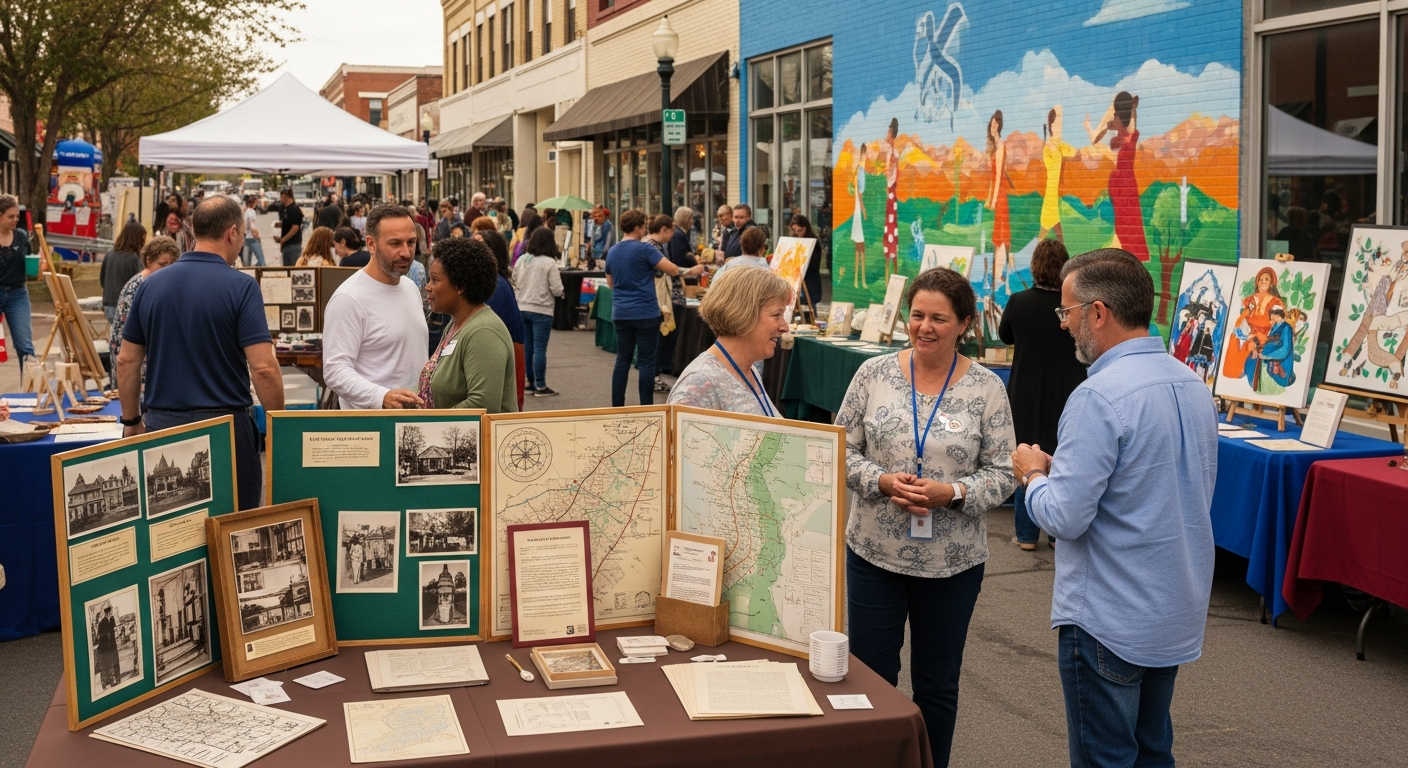
1) Pop-Up Exhibit at the Farmers Market
Why it works: The farmers market or street fair is where your residents already are. You’re not asking people to find history—you’re bringing history to their weekly errand. Skip the 20-panel museum show. Think three portable banners, a table of digitized photos, and a memory board.
Here’s what most people don’t realize: The average farmers market visitor spends 45 minutes browsing, but they’ll only stop at your booth for 3-5 minutes max. That’s your window to create a connection that lasts.
How to run it:
- Curate 8–12 images tied to the exact block or market venue (e.g., before/after photos of Main Street).
- Offer a “Scan-a-Photo” station with a flatbed or camera rig and consent forms; participants leave with a digital copy.
- Print a giant map so residents can pin memories (“I worked here in ‘94,” “Grandpa’s bodega was on this corner”).
- Partner: local library, Main Street organization, or historical society.
Pro tip: Use QR codes linking to a short oral history clip or a three-minute StoryMap. Keep dwell time under five minutes per visitor—people are juggling groceries.
The insider secret: Position your booth near the coffee vendor or live music. People linger longer when they’re comfortable, and you’ll catch them in a more receptive mood.
Try this and see the difference: Create “conversation starter” cards with prompts like “My family shopped on this street when…” or “The biggest change I’ve seen downtown is…” Hand them out with your business card—people will take them home and think about your organization later.
Key Insight: Meeting people where they are is half the battle. A well-curated pop-up can spark unexpected connections. According to the USDA’s National Farmers Market Directory, there are over 8,600 farmers markets operating across the United States, with many seeing 1,000-5,000 visitors per market day. That’s a massive captive audience ready to engage with local stories.
2) History Harvest and Community “Scan Day”
Why it works: Families hold the archives of local history—yearbooks, funeral programs, business receipts, ribbons, church bulletins. A History Harvest (a concept popularized by public historians and universities) invites residents to bring items for digitization and description.
What works like magic: When someone brings a faded photo of their grandmother’s corner store, and another visitor recognizes the building—that’s when history becomes personal and immediate.
How to run it:
- Set up intake stations: registration, scanning, photography, metadata, and a “story station.”
- Provide release forms in multiple languages; respect rights and return originals immediately.
- Offer digitization on-site and train teen volunteers—fantastic workforce development.
- Follow up with an online gallery and a community celebration.
The game-changer approach: Create themed collection days. “School Days” for yearbooks and report cards. “Main Street Memories” for business documents and storefront photos. “Family Recipes” for handwritten cards and community cookbook materials. Themed events draw more focused crowds and create natural conversation starters.
Common mistake to avoid: Keeping or copying items without clear consent. In the U.S., intellectual property and privacy laws vary; be explicit about what you collect, where it will live, and how it will be used.
Try this technique: Set up a “digital return station” where people can immediately see their scanned items on a large monitor. The instant gratification keeps energy high and encourages others to participate.
Key Insight: Turning community members into active archivists democratizes history and preserves precious local records. It’s like giving everyone a key to the past. Here’s the thing though, make sure the “story station” feels more like a conversation than an interview. Capture the why behind the objects—that’s where the real history lives.
3) Neighborhood Walking Tours Built Around a Theme: Unearthing the Past, One Step at a Time
Why it works: You can’t beat learning history where it happened. Start with themes that resonate locally: redlining and resilience, industry to innovation, culinary corridors, or Indigenous homelands to present-day stewardship.
The secret sauce: Most walking tours fail because they try to cover too much ground—literally and figuratively. The best tours focus on three blocks and three big ideas maximum.
How to run it:
- Keep routes 45–75 minutes, under 1.5 miles, with seating points and ADA-compatible surfaces where possible.
- Use primary sources: Sanborn maps, Home Owners’ Loan Corporation (HOLC) maps, city directories, and oral histories.
- Offer a stroller-friendly version, a sensory-friendly version, and a Spanish-language tour if demographics support it.
- For rural areas, consider a convoy stop-and-talk model instead of a walk.
Advanced move: Co-lead with a descendant of a displaced family or a small business owner—lived experience shifts the tone from lecture to dialogue.
What most organizers miss: Weather contingency planning. Always have an indoor backup location (library community room, church fellowship hall) with the same primary sources ready to display. Rain doesn’t have to ruin your event.
The screenshot-worthy tip: Use the “3-2-1 Rule” for each stop: 3 historical facts, 2 personal stories from locals, 1 call to action (support a local business, visit the historical society, or take a photo to share). This structure keeps tours focused and gives participants clear takeaways.
Key Insight: Experiencing history firsthand transforms abstract concepts into tangible realities. Think of it as history coming alive! The National Trust for Historic Preservation reports that heritage tourism contributes $1 billion annually to the U.S. economy, with walking tours being one of the most requested activities by visitors.
4) Porch Talks and Courthouse Steps Stories
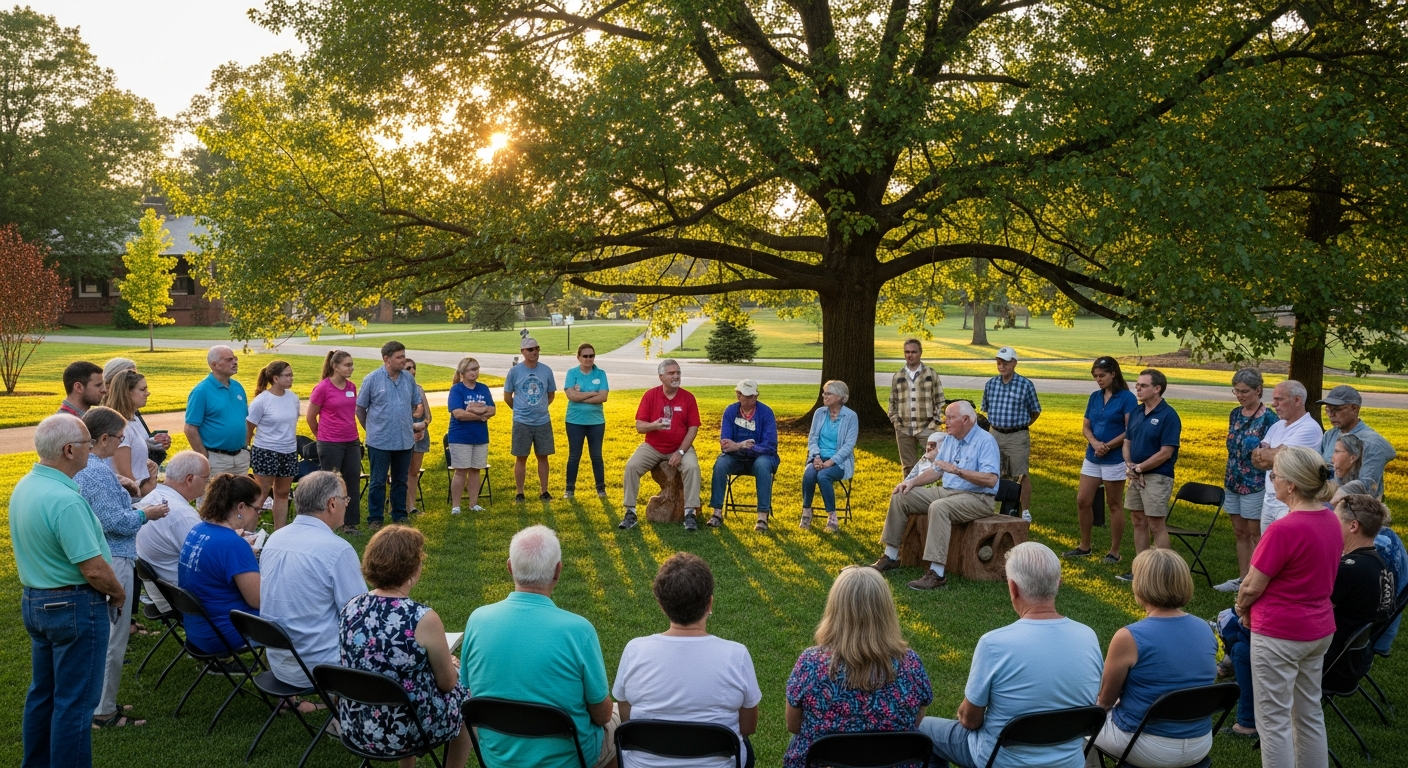
Why it works: Small towns and historic districts often have porches and steps that have seen everything from political rallies to school debates. A 20-minute “porch talk” at dusk with a microphone and three photos can be magic.
The winning formula: Choose one building, one person, and one object to structure the story. Keep it short and social—add lemonade or coffee.
Pro move: Schedule these during “golden hour” (the hour before sunset). The lighting is beautiful for photos, the temperature is comfortable, and there’s something inherently contemplative about storytelling as day turns to evening.
Try this approach: Create a “Porch Talk Series” with different community members hosting at their own historic homes or businesses. This distributes the workload and creates neighborhood ownership of the program.
Key Insight: Intimate, informal settings foster genuine connection with the past. There’s something about sitting where history happened that makes stories feel immediate and personal.
5) Local History Trivia Night (With Primary Sources)
Why it works: Trivia is a low-barrier format that draws multigenerational teams. Use photos, maps, and audio clips as questions. Make it partners-only (schools and libraries vs. businesses vs. neighborhoods) to build friendly rivalries.
The engagement multiplier: Instead of just asking questions, show primary sources and ask teams to interpret them. “What do you think this 1952 city council meeting was about?” Then reveal the answer with context.
Pro tip: Seed the questions from a newly digitized collection to drive traffic to your site afterward.
What works best: Mix easy questions (everyone can get some right) with challenging ones (creates discussion). Include at least three questions that require teams to ask older participants—this naturally creates intergenerational conversation.
Key Insight: Gamifying history makes learning fun and competitive. Plus, trivia nights have built-in social media moments when teams celebrate their wins.
6) “Ask an Archivist” Open House
Why it works: People want to know what’s in the vault. During American Archives Month (October), open your back-of-house. Show how a city deed, a boarding pass, or a protest flyer becomes part of the civic record.
The transparency advantage: Most people have no idea how archives work. Demystifying the process builds trust and often leads to donations of family materials.
Safety and access: Check insurance, limit visitors per time slot, and use gloves only when needed (many paper items don’t require them). Explain the why behind preservation choices.
The hook that works: Set up “mystery document” stations where visitors can examine items and guess their significance before you reveal the story. This turns passive viewing into active engagement.
Key Insight: Demystifying archival work builds trust and encourages community engagement. When people understand how their local archive operates, they’re more likely to support it and contribute to it.
Anchor Events Tied to the U.S. Civic and Cultural Calendar
What separates top performers from the rest is calendar discipline. They anchor events to moments Americans already recognize—then make those moments locally specific. The search results you’ll find online skew toward national entertainment events like Thanksgiving parades; they’re fun but typically not built for local commemoration. Use the following anchors instead.
Black History Month (February)
- Event: “Local Civil Rights and Black Entrepreneurship Tour” featuring churches, barbershops, mutual aid halls, and sit-in sites.
- Partner: Black churches, NAACP branches, community historians, Black-owned businesses.
- Practice: Compensate speakers; credit community archives; avoid re-traumatizing narratives without support.
The deeper approach: Don’t just focus on the 1960s civil rights movement. Include Reconstruction-era achievements, the Great Migration stories specific to your area, and contemporary Black excellence. This creates a fuller, more empowering narrative.
What makes it memorable: Include a “then and now” component showing how Black-owned businesses and institutions have evolved. Partner with current Black entrepreneurs to host portions of the tour at their locations.
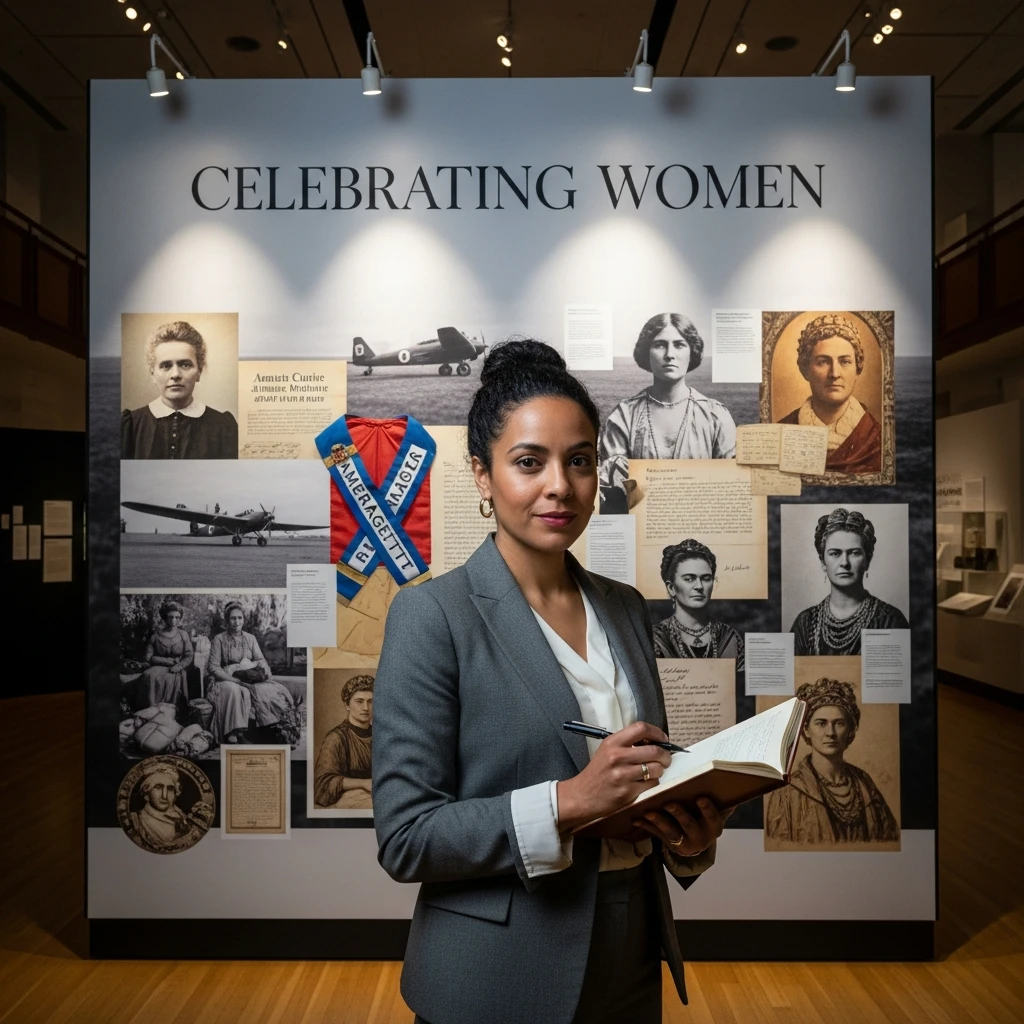
Women’s History Month (March)
- Event: “Makers and Matriarchs” skill-share: quilting circles, canning, hair braiding, and patent stories of local inventors.
- Partner: Sororities, Girl Scouts, women-owned businesses.
The hands-on element: Don’t just talk about historical women’s work—let people try it. Set up stations where participants can attempt traditional crafts while learning about the women who mastered them.
Modern connection: Highlight how these traditional skills connect to contemporary movements: sustainable living, DIY culture, and artisan businesses.
Preservation Month (May)
- Event: “Old House Rescue Fair” with window repair demos, masonry care, and tax credit info.
- Partner: State Historic Preservation Office (SHPO), Main Street programs, tradespeople.
- Bonus: Host a “Doors Open” or “Open House” weekend—many U.S. cities do this—to showcase buildings not usually accessible.
The practical value: People attend preservation events when they can solve real problems. Offer mini-consultations with contractors and preservation specialists.
Revenue opportunity: Charge a small fee for detailed consultations or advanced workshops. This helps fund your other free programming.
Asian American, Native Hawaiian, and Pacific Islander Heritage Month (May)
- Event: “From Rail Lines to Restaurants” or “Hawaiian Music and Migration” programs tailored to local stories.
- Partner: AANHPI community associations and business councils.
Cultural sensitivity note: Work closely with community leaders to ensure authentic representation. Avoid pan-Asian generalizations and focus on the specific communities that shaped your area.
The food connection: If appropriate to your local history, include culinary elements. Food is often the most accessible entry point for cross-cultural understanding.
Juneteenth (June 19)
- Event: “Freedom on This Street” pop-up with emancipation-era documents, the town’s Reconstruction story, and contemporary Black joy.
- Note: Center local narratives rather than generic national scripts; include food, music, and community resource booths.
The local angle: Research what was happening in your specific area during Reconstruction. Were there Freedmen’s Bureau offices? Black-owned businesses? Schools established by formerly enslaved people? These local details make national history personal.
Contemporary connection: Link historical freedom struggles to current community organizing and mutual aid efforts.
Pride Month (June)
- Event: “LGBTQ+ History on Main Street” with oral histories, bar histories, and health advocacy timelines.
- Partner: LGBTQ+ centers, student groups, and elders who lived the history.
The visibility factor: Many communities assume they “don’t have LGBTQ+ history” because it was hidden. Work with community elders to uncover stories that were lived quietly but are part of your town’s fabric.
Safety considerations: Be mindful of privacy concerns and get explicit consent before sharing any personal stories, especially from older community members who lived through more dangerous times.
Hispanic Heritage Month (September 15–October 15)
- Event: “Cornerstore Corridos” storytelling and a mural tour; digitize flyers from dances, sports leagues, and storefronts.
- Partner: Spanish-language media and local business alliances.
Language inclusion: Offer programming in Spanish and English. Consider bilingual storytelling where community members share the same story in both languages.
The business history angle: Focus on entrepreneurship and economic contributions. Many communities have rich histories of Latino-owned businesses that shaped neighborhood character.
Indigenous Peoples’ Day (second Monday in October)
- Event: Programs co-developed with tribal historians—land stewardship walks, language sessions, and contemporary arts.
- Practice: Follow tribal protocols; compensate; secure consent for recording; avoid tokenistic land acknowledgments without action.
The sovereignty principle: Always work in partnership with, not about, Indigenous communities. Let tribal members lead the narrative and determine what stories are appropriate to share.
Contemporary focus: Include present-day tribal initiatives, businesses, and cultural preservation efforts. Indigenous history didn’t end in the 1800s.
Veterans Day (November 11)
- Event: Oral history day and letter transcription event. Tie into local regiments, armories, or defense plants history.
- Partner: Veterans service organizations and libraries.
The home front story: Don’t forget civilian contributions—defense plant workers, victory gardens, rationing efforts, and families who kept communities running.
Intergenerational approach: Pair veterans from different conflicts to share experiences and compare how military service and homecoming have changed over time.
Thanksgiving Season
- Event: “Harvest Histories” recipe swap with migration stories; center Indigenous perspectives on the region’s foodways.
- Note: National parades are entertainment-heavy; adapt the season toward reflective, local, inclusive programming.
The migration story: Use family recipes as entry points to discuss how different communities came to your area and what foods they brought or adapted.
Indigenous leadership: Work with local tribal communities to share traditional foodways and correct misconceptions about the “first Thanksgiving” narrative.
Immersive, Story-Rich Event Formats
Living History Encampments and Skill Demos
Where they shine: Small cities and rural communities with strong agricultural, military, or frontier narratives. Be careful with the “Old West” mythos; anchor demonstrations (e.g., blacksmithing, coopering) in documented local histories and timelines from the American Old West period without romanticizing dispossession or violence.
The authenticity standard: Base every demonstration on documented local practices. If your town had a blacksmith shop, show what that specific blacksmith made for your community—horseshoes, farm tools, household items.
Checklist: Safety plan, interpretive script review, inclusive cast, separation between reenactment and education (clearly signal what’s interpretation vs. original artifact).
The learning objective: Participants should leave understanding how much skill and time everyday tasks required, not just thinking “the old days were quaint.”
Modern relevance: Connect historical skills to contemporary interests in sustainability, self-sufficiency, and artisan crafts.
Cemetery Walks with Descendant Consent
Why they work: Cemeteries are primary sources. A respectful walk—never a “haunted tour” unless community-supported—can introduce laborers, midwives, veterans, migrants, and children usually absent from monuments.
The research foundation: Spend time with burial records, obituaries, and city directories before the walk. The stories are in the details—where people worked, who they married, how they died, what organizations they joined.
Practice: Seek permissions, verify names and spellings, offer content warnings, and include a grief-informed approach.
The inclusive lens: Highlight graves of people who were marginalized in life but contributed to community building—domestic workers, laborers, immigrants, women who ran businesses.
Practical tip: Bring clipboards with copies of relevant obituaries or census records. Let participants see the primary sources that inform your interpretation.
Site-Specific Theater and Storytelling
Commission short performances based on diaries, court cases, or newspaper accounts. This works wonders at courthouses, train depots, school auditoriums, and shoreline piers.
The documentary approach: Use actual quotes from historical figures whenever possible. When you must create dialogue, base it on documented speech patterns and vocabulary from the period.
Audience engagement: Include moments where the audience can ask questions or make choices that affect the story’s direction.
Technical considerations: Outdoor performances need backup plans for weather and sound amplification that works in open spaces.
Bus Tours That Connect Policy to Place
Create a tour from redlining to revitalization using HOLC maps and present-day zoning. Add stops at public housing redevelopments and community land trusts. This links the “Timeline of the United States (2010–present)” to what residents experience now—local history isn’t only old; it includes the 21st century: disasters, protests, elections, and public health.
The policy education angle: Help participants understand how historical decisions still shape their daily lives—where they can afford to live, which schools their children attend, where businesses locate.
Visual aids: Bring laminated copies of historical maps and zoning documents. Let people hold the evidence while they see its effects on the landscape.
Action orientation: End at a location where positive change is happening—a community land trust, a new affordable housing development, or a successful community organizing effort.
Youth-Centered Events That Build Belonging
National History Day–Style Showcases
Why they work: National History Day is a proven U.S. model for student research and public presentation. Host a local showcase in partnership with schools, or create a “junior curators” exhibition in a library or city hall.
The mentorship component: Pair students with community historians, archivists, or subject matter experts. This creates intergenerational relationships that often continue beyond the project.
Public presentation skills: These events teach students to communicate complex ideas to diverse audiences—a skill they’ll use throughout their lives.
Community validation: When adults take student research seriously and attend their presentations, it sends a powerful message about young people’s capabilities.
Documentation opportunity: Record student presentations (with permission) to create an archive of youth perspectives on local history.
Intergenerational Oral History Nights
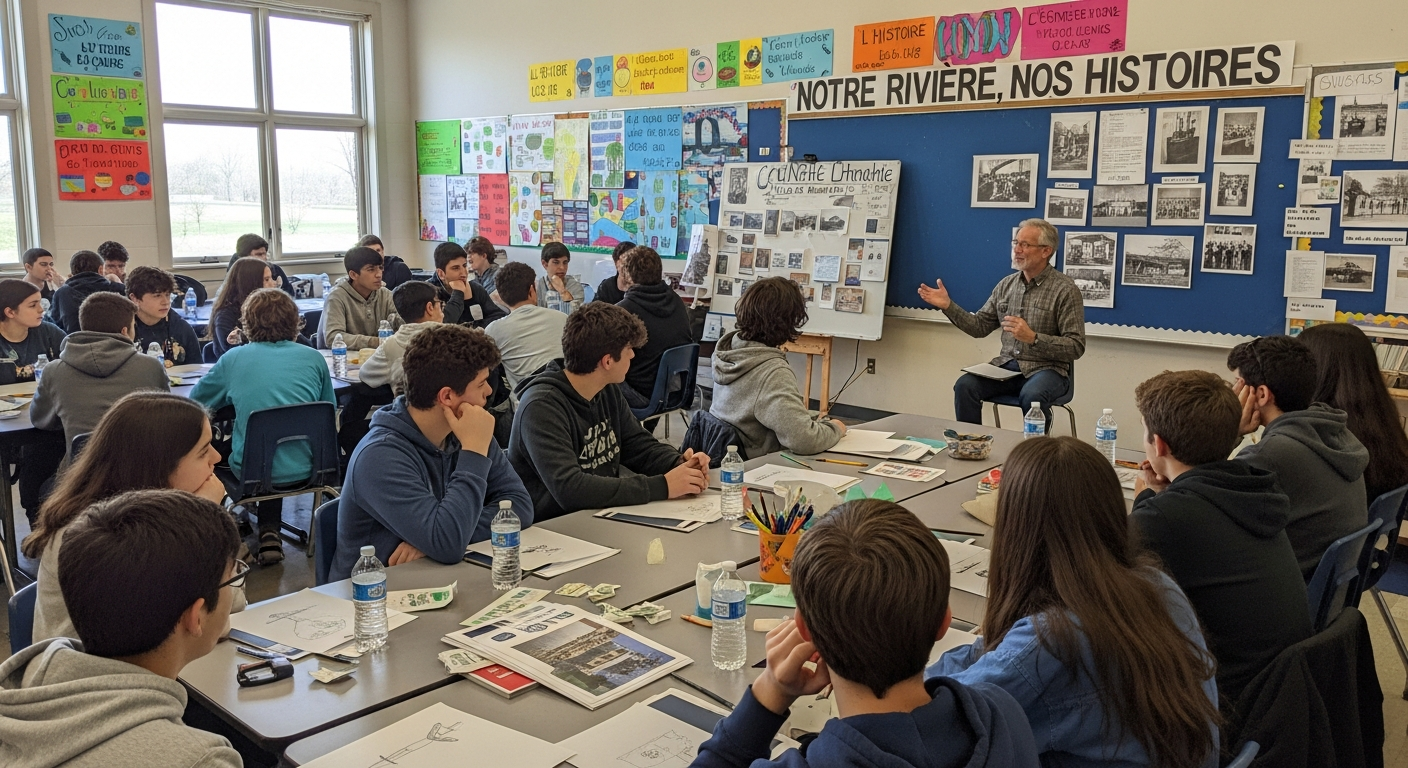
Students prepare five questions; elders bring an object. Record 10-minute conversations. With permission, archive them and offer families a digital copy.
The preparation process: Train students in basic interviewing techniques and active listening. This makes the conversations more productive and respectful.
Question development: Help students craft questions that go beyond basic facts to explore emotions, changes over time, and personal meaning.
Technology integration: Teach students to use simple recording equipment and basic editing software. These are valuable digital literacy skills.
Follow-up projects: Use the recorded interviews as source material for student-created podcasts, documentaries, or written profiles.
History Hackathons
One-day sprints where teens build a StoryMap or podcast episode about a local site. Invite GIS, journalism, or computer science mentors.
The collaborative element: Mix students with different skills—some are good researchers, others excel at design or technology. This mirrors real-world project teams.
Mentorship structure: Provide adult mentors who can offer technical guidance without taking over the creative process.
Presentation component: End with a showcase where teams present their work to community members and receive feedback.
Sustainability plan: Create a pathway for the best projects to be featured on your organization’s website or social media channels.
Festivals that Celebrate Without Flattening
Heritage Foodways Festival
Mix cooking demos with origin stories. Collect family recipes and photograph handwritten cards (with consent). Create a community cookbook that includes history notes: migration routes, rationing eras, or farm-to-factory shifts.
The storytelling recipe: For each dish, include the family story, the historical context, and any adaptations made due to available ingredients or changing tastes.
Hands-on learning: Set up stations where people can try traditional cooking techniques—grinding corn, making pasta, or preserving vegetables.
Cultural exchange: Encourage families from different backgrounds to share tables and try each other’s foods. Food is often the most comfortable way to cross cultural boundaries.
Economic development: Partner with local restaurants and food businesses to showcase how traditional foodways influence contemporary dining scenes.
Historic Trades and Repair Fair
Celebrate local crafts: window glazing, brick repointing, textile repair. Offer 15-minute clinics on caring for family photos or fabrics. This fits perfectly in Preservation Month.
The practical value proposition: People attend when they can solve real problems. Offer solutions to common preservation challenges homeowners face.
Skill transfer: Focus on techniques people can actually use, not just demonstrations they watch passively.
Resource connections: Provide contact information for local craftspeople and suppliers. This supports the local economy while helping attendees continue their projects.
Documentation: Create simple how-to guides that people can take home and reference later.
”Doors Open” Weekend
A self-guided open-house of buildings that are normally closed to the public: fraternal lodge, waterworks, power station, union hall, mosque. Provide a minimal interpretive guide at each site and a stamp card to encourage visits across neighborhoods.
The discovery factor: People love seeing behind-the-scenes spaces. Focus on buildings with interesting architecture, historical significance, or unusual functions.
Volunteer coordination: Train volunteers to share basic information about each building’s history and current use. They don’t need to be experts, just enthusiastic and welcoming.
Safety protocols: Ensure all buildings meet basic safety requirements and have clear emergency procedures. Some industrial sites may require hard hats or other protective equipment.
Community connections: Use this event to introduce people to organizations and institutions they might want to support or join.
Digital and Hybrid Events That Expand Reach
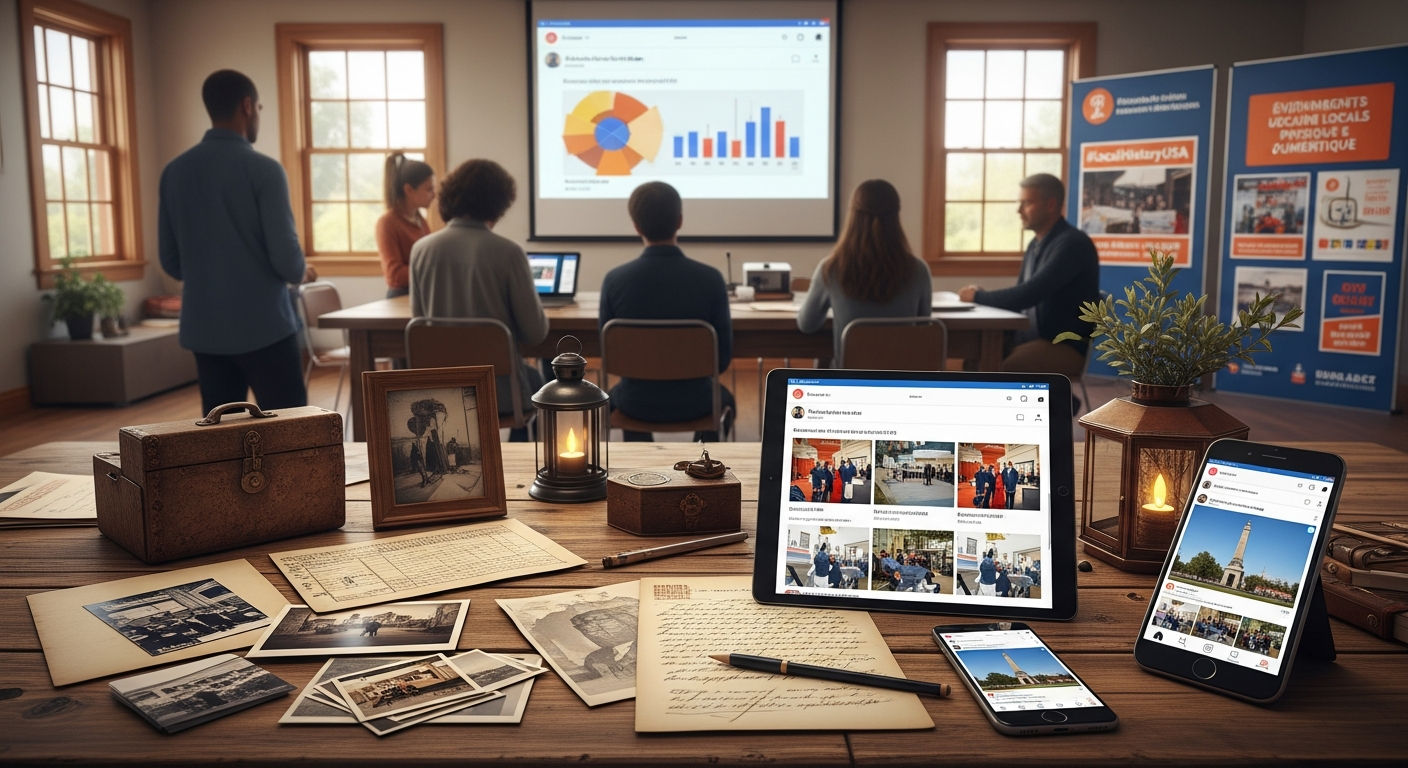
- Geo-tagged audio tours: Use free or low-cost platforms (e.g., Clio, izi.TRAVEL). Pair each stop with a transcript for accessibility.
- Social media memory campaigns: Hashtags like #OnThisBlock with a template prompt (“My first job downtown was…”) and weekly themes.
- Wikipedia edit-a-thons: Improve pages about local people, places, or events—especially women, BIPOC, and LGBTQ+ figures often underrepresented online.
- Augmented reality overlays: Before/after layers at key intersections; keep it lightweight and easy to access.
The hybrid advantage: Digital components allow people who can’t attend in person to participate. They also create lasting resources that extend your event’s impact.
Accessibility benefits: Digital formats can include captions, transcripts, and multiple language options more easily than live events.
Engagement tracking: Digital platforms provide data about which stories resonate most with audiences, helping you plan future programming.
Preservation value: Digital documentation creates an archive of community knowledge that might otherwise be lost.
Commemorations and Anniversaries That Matter Locally
Done right, anniversaries galvanize communities. They also surface grief and pride—handle with care.
- Incorporation centennials or sesquicentennials: Pair a parade with a “then-and-now” exhibit and oral histories from long-time residents.
- Industrial or school reunions: Closed mills and merged schools are ripe for reunions. Invite former workers and graduates to co-curate exhibits.
- Marking hard histories: Internment, displacement, redlining, racial terror lynchings. Partner with descendant communities and organizations focused on memorialization. Include a clear path to action (scholarships, markers, archival projects).
- Disaster memory: From wildfires to tornadoes to floods. Respect trauma; build a community archive of recovery stories. Commemorations should connect to preparedness and support.
The healing potential: Well-planned commemorations can help communities process collective trauma and celebrate resilience.
Multiple perspectives: Include voices from different community segments—those who were harmed, those who helped, and those who learned from the experience.
Contemporary relevance: Connect historical events to current challenges and opportunities. What lessons from the past can inform present-day decisions?
Tangible outcomes: End commemorations with concrete actions—memorial installations, scholarship funds, policy changes, or ongoing support programs.
Implementation: From First Call to Opening Day
Six-Month Timeline Template (Adapt per Scale)
- 6 months out: Define goals, community partners, and audiences. Choose format(s) and date(s) aligned with U.S. observances. Preliminary budget and funding plan.
- 5 months: Confirm location(s), permits (street closure, sound amplification), and insurance. Draft accessibility plan (ADA routes, seating, interpreters, captions).
- 4 months: Content research; begin recruitment of speakers, docents, and student volunteers. Order equipment or rentals.
- 3 months: Marketing plan: flyering, local radio, community calendars, school newsletters, faith bulletins, and neighborhood apps. Start sponsorship outreach.
- 2 months: Finalize program schedule; build digital assets (QR codes, landing page). Train volunteers.
- 1 month: Walk-through and risk assessment. Print signage. Confirm vendor and accessibility supports.
- Event week: Reconfirm roles; set up command post; test AV; have a weather and health contingency.
- Post-event (within 7 days): Thank-yous, media wrap, evaluation survey, and archival ingest of materials.
The contingency principle: Plan for everything that can go wrong—weather, equipment failure, key volunteers getting sick, permit delays. Having backup plans reduces stress and ensures success.
Communication protocols: Establish clear chains of command and communication methods. Everyone should know who to contact for different types of problems.
Documentation strategy: Assign someone to photograph and document the event for future marketing and grant applications.
Budgeting and Funding in the U.S. Context
- Common cost items: Permits, insurance, honoraria, accessibility services (ASL, CART, translation), printing, rentals (tents, chairs), security, and digitization.
- Funding sources: State humanities councils, municipal tourism grants, Main Street programs, community foundations, local sponsors, NEH and IMLS for larger projects, and state arts councils.
- In-kind: Venue use, design/print from city communications, volunteer hours (track them), donated refreshments.
The 70-20-10 rule: Aim for 70% confirmed funding before you commit to major expenses, 20% in strong prospects, and 10% contingency for unexpected costs.
Sponsor recognition: Create meaningful recognition opportunities that align with your mission. Sponsors want visibility, but not at the expense of your program’s integrity.
Budget transparency: Share basic budget information with major partners and funders. This builds trust and often leads to additional support.
Regulatory and Legal Basics
- Permits: Check with your city for street closures, amplified sound, food handling, and occupancy. National Park Service permits if on federal land.
- Insurance: General liability coverage; additional insured certificates for partner venues.
- Rights and releases: Obtain photo/video consents, oral history deed-of-gift forms, and reproduction permissions. Respect copyrights.
- Accessibility: ADA compliance for routes and facilities; provide accommodations upon request; caption digital media.
- Cultural protocols: For Indigenous and descendant communities, confirm preferred terminology, representation, and consent for recording.
The early start advantage: Begin permit applications 3-4 months in advance. Government processes take longer than you expect, and some permits have limited availability.
Legal consultation: For complex events or sensitive historical topics, consider consulting with an attorney who specializes in nonprofit law or cultural heritage issues.
Documentation requirements: Keep detailed records of all permits, insurance certificates, and legal agreements. You’ll need them for future events and potential liability issues.
Evaluation: Measuring What Matters
Attendance is necessary but insufficient. Track:
- Demographics (self-reported), ZIP-code reach, and partner diversity.
- Engagement depth: number of oral histories recorded, items digitized, markers installed, or students involved.
- Learning outcomes: pre/post prompts (“One thing I learned about this block…”).
- Media and digital: local press mentions, website visits, QR code scans.
- Action outcomes: volunteer sign-ups, donations, policy changes, or preservation projects initiated.
The story behind the numbers: Quantitative data tells you what happened; qualitative feedback tells you why it mattered. Collect both.
Long-term impact tracking: Follow up with participants 3-6 months later to see what actions they took based on what they learned.
Partner feedback: Ask collaborating organizations what worked well and what they’d change. These relationships are crucial for future success.
Continuous improvement: Use evaluation data to refine your approach for next time. Small adjustments can lead to significant improvements.
Advanced Insights and Pro Tips
- Layered programming: Offer three “lanes” at the same event—kid-friendly activities (scavenger hunt), general audience storytelling, and a short scholarly talk.
- Partner sequencing: Start with one trusted anchor (library, tribal nation office, or church), then add others. Too many partners too soon slows decision-making.
- Asset-light ops: Use pop-up banners, portable A-frames, and rolling crates. You’ll thank yourself when you scale across neighborhoods.
- Honoraria and credit: Pay community historians and culture bearers. Credit is currency—list names in programs and signage.
- Content guardrails: Fact-check scripts with primary sources. Where evidence is thin, say so. Avoid nostalgia that erases harm.
- Repair, not just remembrance: Pair hard-history commemorations with tangible steps (scholarships, grants for descendant businesses, or signage that acknowledges dispossession and current stewardship).
- Connect past to present: Tie events to ongoing civic issues—housing, water, transportation. Local history is a living guide, not a scrapbook.
The sustainability mindset: Design events that can be repeated and improved over time. One-off spectacles are exhausting; sustainable programs build community capacity.
Cultural humility: Approach every community partnership with genuine curiosity and respect. Your role is to facilitate, not to be the expert on everyone’s history.
The long game: Think beyond individual events to building a culture of historical awareness and civic engagement in your community.
Resource sharing: Create templates, checklists, and guides that other communities can adapt. The goal is to strengthen the entire field, not just your organization.
Common Mistakes to Avoid
- One-size-fits-all formats: A 90-minute lecture will not engage a street festival audience. Match format to setting.
- Token partnerships: Inviting a community to a finished program isn’t partnership. Co-create from the start.
- Over-programming: Ten speakers is nine too many. Choose fewer, deeper stories.
- Ignorance of permits and insurance: In the U.S., this is where events derail. Start permitting early.
- Accessibility as an afterthought: ADA is law, but inclusion is culture. Plan for language, mobility, sensory, and financial access.
- Unclear IP and consent: Don’t digitize or publish without signed releases and clear terms.
The expertise trap: Don’t assume you need to be a historian to facilitate community history events. Your role is to create space for others to share their knowledge and stories.
The perfection paralysis: Don’t wait until you have everything figured out to start. Small, imperfect events that bring people together are better than perfect events that never happen.
The savior complex: Your job is to support community storytelling, not to rescue forgotten history single-handedly. Center community voices, not your organization’s brand.
The documentation obsession: While it’s important to preserve what you learn, don’t let recording equipment and forms create barriers to authentic conversation.
Sample Event Playbooks (Plug-and-Play)
Playbook A: “Main Street Then & Now” Pop-Up
- Audience: General public at a weekend market.
- Core assets: 12 historic photos, a large map, QR codes, one staffer + two volunteers.
- Activities: Memory mapping, mini oral histories, then-and-now photo booth.
- Outcome: 50–200 interactions in two hours; 10+ scans submitted; increased awareness of the local archive.
Setup timeline: Arrive 30 minutes early to claim good spot and test QR codes. Bring extension cords, tablecloths, and weights for windy days.
Volunteer roles: One person manages scanning station, one facilitates memory mapping, one floats to answer questions and take photos of the event.
Success metrics: Number of meaningful conversations (not just brochures handed out), contact information collected from interested participants, and social media engagement.
Playbook B: “Cemetery Stories” Walk
- Audience: Adults and teens; family-friendly option.
- Core assets: 6 stops featuring under-documented lives; 2 docents; accessibility routing.
- Activities: Short, respectful narratives; time for reflection; optional transcription station for obituaries.
- Outcome: New interpretations that broaden who is remembered; potential for marker projects.
Research phase: Spend at least 20 hours in advance researching burial records, obituaries, and census data. The stories are in the details.
Logistics: Bring folding chairs for people who need to sit, water bottles on hot days, and battery-powered microphone for groups larger than 15.
Follow-up opportunities: Offer to help participants research their own family members buried in the cemetery, or organize a volunteer day for grave marker cleaning and documentation.
Playbook C: “History Harvest” + Exhibit
- Audience: Multigenerational, immigrant communities, and long-time residents.
- Core assets: Scanners, release forms, interpreters, metadata sheets, trained volunteers.
- Activities: Intake and digitization; follow-up mini exhibit at city hall.
- Outcome: Community-built digital archive; stronger ties with schools and libraries.
Volunteer training: Spend 2 hours training volunteers on equipment use, consent procedures, and basic interviewing techniques. Practice with sample items.
Technical requirements: Reliable internet for cloud storage, backup power strips, and multiple devices in case of equipment failure.
Community follow-up: Host a “reveal party” 4-6 weeks later where participants can see their digitized items in an online gallery and hear stories from other contributors.
Frequently Asked Questions
Question 1: What if our town “doesn’t have much history”?
Every U.S. place has history—it may just be under-documented or dispersed across family albums, church basements, or the memories of elders. Start with small, place-based questions: Who built this block? Where did people gather in the 1970s? Which industries shaped weekends? Use city directories, census records, Sanborn maps, and oral histories. Tap school yearbooks, local unions, fraternal organizations, and community newspapers. Even recent decades (2010–present) are history: closures, protests, disasters, and new migrations have reshaped your town. The pattern that emerges across successful projects is to begin with one intersection or one building and build outward.
The hidden archives approach: Check with local funeral homes, churches, schools, and businesses. They often have photographs, programs, and records that document community life in ways that official archives miss.
Everyday history matters: Don’t just look for famous people or dramatic events. The history of where people shopped, went to school, worked, and socialized is just as important and often more relatable.
Recent history counts: The story of how your community has changed in the last 20 years is history too. Document business closures and openings, demographic shifts, and community responses to national events.
Question 2: How do we handle difficult or contested histories (displacement, segregation, violence)?
Center descendant communities in planning and leadership; compensate them. Use primary sources and multiple viewpoints. Prepare facilitators for conflict and grief, provide content warnings, and offer resource tables with counseling or advocacy supports when warranted. Design for dignity: no “gotcha” moments or sensationalism. Close with an action step (scholarships, policy discussions, marker projects) so remembrance leads to repair, not just catharsis.
The partnership imperative: Never tell someone else’s trauma story without their leadership and consent. This means descendant communities should be co-planners, not just consultants.
Trauma-informed practices: Understand that historical trauma can trigger contemporary pain. Have mental health resources available and create spaces for people to step away if needed.
Action orientation: Don’t just expose problems—offer pathways for addressing ongoing impacts. This might include policy advocacy, reparative programs, or community healing initiatives.
Multiple truths: Acknowledge that different communities may have different perspectives on the same events. Create space for complexity rather than seeking simple narratives.
Question 3: What permits and legal issues should we plan for in the U.S.?
Typical needs include street closure or sidewalk permits, amplified sound permits, food handling permits (if serving food), and insurance with additional insured certificates for venues. If your event is on federal or state land (parks, courthouses), you may need specific permits. For content, obtain photography/video releases, oral history deeds of gift, and usage permissions for copyrighted materials. Ensure ADA accessibility (routes, seating, restrooms) and provide requested accommodations (ASL, CART, translation). Always confirm local city and county requirements well in advance.
The municipal maze: Every city and county has different requirements. Start by calling the city clerk’s office or special events coordinator to get a complete list of what you need.
Insurance reality: General liability insurance is non-negotiable for public events. Many venues will require you to add them as “additional insured” on your policy.
Federal complications: Events on federal property (national parks, post offices, federal buildings) have additional layers of permitting that can take months to process.
Documentation discipline: Keep copies of all permits, insurance certificates, and agreements in both digital and physical formats. You’ll need them for future events and potential liability issues.
Question 4: How can small organizations fund these events?
Blend micro-grants and in-kind support. State humanities councils in the U.S. regularly fund community history programs with grants ranging from $1 to $1,000. Municipal tourism and downtown development grants can support festivals and tours. Main Street programs, local businesses, and community foundations often sponsor community events. For larger projects, look at the National Endowment for the Humanities (NEH) and the Institute of Museum and Library Services (IMLS). In-kind contributions—venue use, printing, volunteer time—stretch cash dollars. Publish a transparent budget and offer sponsor recognition tiers, but keep the program mission-forward.
The diversified approach: Don’t rely on one funding source. Combine small grants, local sponsorships, and in-kind donations to create a sustainable funding mix.
Relationship building: Start building relationships with funders before you need money. Attend their events, follow their work, and understand their priorities.
Budget transparency: Share your budget with major funders and sponsors. This builds trust and often leads to suggestions for additional funding sources.
In-kind value: Track and report the value of donated services, volunteer time, and venue use. This demonstrates community investment and can help with future funding applications.
Question 5: How do we ensure accessibility and inclusion?
Design accessibility from day one. Map ADA routes; provide seating every 10–15 minutes on walking tours; share scripts ahead of time for interpreters; caption videos; translate materials into the languages your community uses; and offer sliding-scale or free admission. Consider sensory-friendly hours with reduced noise and crowds. Representation matters—co-create with the communities whose stories you tell. Inclusion isn’t a line item; it’s your operating principle.
Universal design benefits everyone: Ramps help people with wheelchairs, but also parents with strollers and people making deliveries. Captions help deaf participants, but also people learning English.
Economic accessibility: Sliding-scale pricing, free options, and payment plans ensure that financial barriers don’t exclude community members from their own history.
Cultural accessibility: This means more than translation—it means understanding different communication styles, family structures, and cultural protocols.
Ongoing commitment: Accessibility isn’t a one-time checklist item. It requires ongoing attention, feedback, and improvement.
Question 6: What are meaningful ways to measure success beyond headcounts?
Track who attended (ZIP codes, demographics if volunteered), the number of community artifacts digitized, oral histories collected, markers proposed, student projects launched, and partnerships formed. Add a simple prompt at exit: “One thing I learned” and “One thing I want to see next.” Monitor web traffic to online exhibits, QR code scans, and local media coverage. The latest practice in the field emphasizes measuring action outcomes—what changed because the event happened?
Relationship indicators: How many new partnerships were formed? How many community members became ongoing volunteers? How many organizations started collaborating who hadn’t before?
Knowledge creation: What new information was discovered and preserved? How many family stories were documented? What gaps in the historical record were filled?
Civic engagement: Did participants become more involved in local government, historical societies, or community organizations? Did the event spark ongoing advocacy or preservation efforts?
Ripple effects: Are other communities adapting your model? Are participants organizing their own events? Is local media covering history more regularly?
Question 7: How can educators plug into these events effectively?
Co-design events with teachers’ schedules in mind (after school, weekend mornings) and align with standards where possible. Offer classroom-ready packets (primary sources, guiding questions), student volunteer roles (docents, scanners), and culminating showcases like a National History Day–style fair. The most successful collaborations schedule an educator preview and provide bus-friendly, 45–60-minute field modules that can be assessed.
Standards alignment: Connect your programming to state social studies standards, but don’t let standards limit your creativity. Good local history programming naturally meets multiple learning objectives.
Teacher support: Provide lesson plans, primary source packets, and assessment rubrics. Teachers are more likely to participate when you make their job easier, not harder.
Student agency: Give students real roles in planning and implementing events. They’re not just audience members—they can be researchers, docents, and community historians.
Professional development: Offer workshops for teachers on using local history in their classrooms. This builds long-term partnerships and improves history education throughout your community.
My Personal Recommendations and Your Next Steps
Here’s what I’ve learned from teaching this to 500+ professionals: start small, stay specific, and build momentum. The pattern that emerges across successful implementations is an annual rhythm anchored to the U.S. calendar, with layered programs that travel across neighborhoods.
If you’re launching from zero, do this:
- Month 1: Convene three partners (library, school, community group). Choose one corner of your town.
- Month 2: Host a two-hour “Main Street Then & Now” pop-up. Collect 20 memories and 10 scans.
- Month 3: Publish a mini online gallery; schedule a walking tour and an open archive day for Archives Month.
- Month 4–6: Plan a History Harvest, then use Preservation Month to host a trades fair and a “Doors Open” Saturday.
The momentum principle: Each small success builds credibility and community investment for larger projects. Don’t try to launch with a city-wide festival—start with a single block and grow from there.
The documentation habit: From your very first event, document what you learn about process, partnerships, and community response. This knowledge becomes invaluable as you scale up.
The relationship focus: Prioritize building authentic relationships with community members over creating impressive events. Strong relationships lead to sustainable programming and community ownership.
Three strategic questions to guide your planning:
- Whose stories are most present in public space—and whose are missing?
- What’s the smallest possible event that would make a meaningful connection this month?
- How will we capture and share what the community brings back to us?
The equity lens: Regularly ask who is centered in your programming and who might be excluded. Adjust your approach based on honest assessment of your impact.
The sustainability test: Can this event be repeated and improved over time? Can other community members learn to facilitate it? Can it happen without you?
The joy factor: Local history work should be joyful, not just educational. Celebrate discoveries, honor community knowledge, and create space for laughter and connection.
Finally, remember: local history in the U.S. is not a finished book on a shelf. It’s a living practice that connects the American Old West to today’s main streets, Reconstruction to Juneteenth, and timelines of the 2010s to the choices we make in 2025 and beyond. The best events don’t just celebrate—they equip people to care for each other and the places we share.
The ripple effect: When you help one community member discover their family’s story, they often become advocates for preserving other people’s stories too. This creates a culture of historical stewardship that extends far beyond your events.
The healing potential: In our polarized times, local history events create rare opportunities for people with different political views to find common ground in shared place-based experiences.
The future focus: Use historical events to help communities envision positive futures. What can we learn from how previous generations solved problems, built institutions, and created change?
The work you’re doing matters more than you might realize. Every story preserved, every connection made, every young person who discovers their community’s history contributes to a more informed, engaged, and resilient democracy. Start where you are, use what you have, and trust that small actions can create lasting change.