Transcription Audio
The Foundation: Three Non-Negotiable Commitments
29 novembre 2025
Listen to audio:
Transcript Text
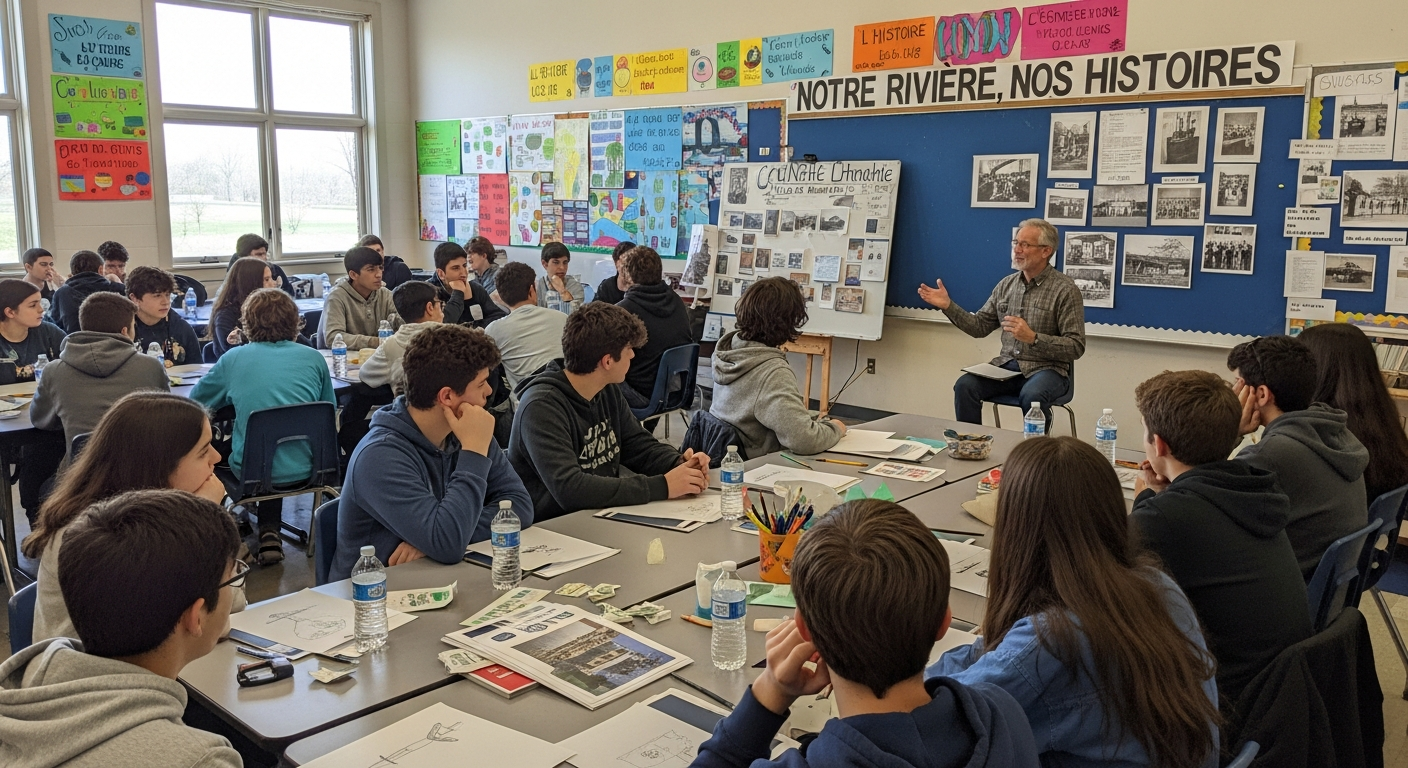
Hello and welcome. Let me start with a question that changed everything for me: do you know where your drinking water starts? I asked that to forty middle schoolers in a cafeteria in southwest Ohio. Two hands went up. One belonged to a kid who raises his hand for everything. The other belonged to a kid who, I later learned, naps through first period. That was the moment I realized our local history program had to start at the tap, not in a dusty binder. If they couldn’t see their lives in the story, why would they care? Our city hugs the Great Miami River. A paper mill used to be the town’s spine—jobs, identity, Friday night softball—until it shut down before most of these kids were born. Add the 1966 flood that bulldozed whole blocks, and what’s left is a story full of holes. Kids fill those holes with TikToks and national narratives that don’t quite fit their streets. So I tried a different pitch: “Our River, Our Stories.” You decide how to tell the past. Tie it to what you care about right now—water quality, a skate spot you love, that empty brick warehouse everyone uses for photos. They didn’t buy it right away. D’Andre shrugged, “History’s just rich guys and wars.” Maya added, “And like, slavery and the Pilgrims. Nothing here.” I nodded. Then let’s fix the story. You take the mic. We built everything around three non-negotiables: 1) Youth-led and deeply creative. 2) Intergenerational on purpose. 3) Place-based—rooted in the actual ground beneath our feet. On our first Wednesday, we tried story circles. I rolled in a beat-up cart stacked with Sanborn fire maps, a brittle 1930s newspaper on the mill’s baseball team, a mason jar of river water, a pile of blank zines, and exactly one dollar’s worth of snack mix. Ms. Alvarez, who worked the line at the mill, joined us. She tapped a photo of a women’s softball team and said, “Your great-aunts were here—you just don’t recognize them yet.” Heads lifted. Shoulders leaned in. Suddenly “local history” wasn’t a bronze statue—it was somebody’s aunt, someone’s shift, a teammate on a field by the river. Here’s the truth: the biggest barrier wasn’t their attention span. It was our assumptions about what they cared about. They weren’t bored by the past. They were alienated by the way it was told—stripped of the people they knew and the choices they face today. Then reality slammed us. If you’ve tried this in the U.S., you’ll recognize the obstacles. First, access. The archives were open ten to four, Monday to Friday. Our students were in class then. After school, many had jobs or babysitting. The message was clear: the past is for people with afternoons off. Second, paywalls. Some flood records were digitized, but students hit a wall on their school Chromebooks. Imagine telling a kid, “Your family’s story is right there—if you can pay for it.” Third, the neutrality myth. The city’s urban renewal—what elders quietly called “Negro removal”—still scars people. Even the word “neighborhood” sparked debate. You can’t teach a tidy version of that and call it neutral. And the standards squeeze. Teachers told me, “I love this, but I still have to get them through assessments by May.” Fair. If it can’t live alongside standards, it won’t live at all. We decided to flip access on its head. If the archive couldn’t meet the students where they were, we’d make the archive move. We negotiated roaming rights with the historical society. We digitized a storytelling set—flood maps, factory photos, a few oral histories—and cleared them for student use. We built a hallway mini-exhibit that snapped together in fifteen minutes. Students ran it at lunch. No buses. No permission slips. No “come back during business hours.” We hosted a Story Swap Night with food—tamales and pierogis. We told students to invite anyone who remembered the city before 2000. We had more people than at back-to-school night. Food matters. It says: you belong here. And we gave out the smallest micro-grants you can imagine: five grants, one dollar each. Pitch a project connecting the river to a piece of our history and a choice the city faces now. A dollar isn’t about the money—it’s about trust. When you hand someone even a small budget, you hand them authorship. They didn’t make posters. They made comics. They tried guerrilla theater. They prototyped simple augmented reality for the hallway exhibit that made their classmates stop and look. So what actually worked? First, handing over the author’s pen and a real say in the budget. So many programs invite youth “input” but keep the power to decide what counts. Creativity isn’t dessert. It’s the meal. The moment students knew they could choose their format—a podcast, a performance, a visual installation—their research changed. They didn’t read just to pass a test. They read like creators. Try this: give three format choices before research even starts. Watch how it shifts the questions they ask. Second, intergenerational conversations—but not haphazard ones. Don’t just invite elders to tell stories. Prepare them, and the students, to meet as collaborators. We did a short orientation for elders: consent, listening, how to share honestly without centering yourself. Students practiced asking sharp, respectful questions. That’s where the magic happened. When a 16-year-old asked Ms. Rodriguez, “Who got hired first? Who got fired first?” we didn’t get nostalgia. We got nuance: hiring practices, union politics, who could afford to take a sick day. Our favorite framework was the 3-2-1 rule: three personal stories, two reflections comparing past and present, one piece of advice for the future. Simple and keeps conversations balanced. Third, make the place itself a co-teacher. We walked the trail that follows the old streetcar line and asked why it ran there. We stood at the floodwall and looked at which blocks sit behind it—and which don’t. When students mapped their favorite skate spot against a 1940s mill map, a light turned on. Place-based history isn’t a field trip. It’s a lens for decisions right now: zoning, parks, storm drains, bus stops. When history lives in your feet and your lungs, it sticks. A few snapshots: There was the student who held the mason jar of river water to the light and asked, “So, if the mill dumped here, are we still drinking that story?” Place-based learning turns “then” into “now.” And the next question—what do we do about it?—is where civic life begins. There was the hallway exhibit that stopped eighth graders in their tracks. Fifteen minutes to assemble, zero field trip forms, and suddenly the lunch line was full of kids pointing at a Sanborn map saying, “That’s my block.” If your audience is teens, bring the museum to the hallway. There was Story Swap Night, where a grandfather shared he couldn’t get a bank loan on one side of town in the 1970s, so he fixed cars in his driveway instead. A student asked, “What would have changed if you’d gotten that loan?” He paused, then said, “Maybe I’d have hired your uncle.” That’s not just history. That’s a bridge being built right in front of you. And yes, the constraints. The teacher with testing anxiety wasn’t wrong. The trick was to align what we were doing with the skills students needed anyway: reading primary sources, speaking, argument with evidence, media literacy. When a student produces a two-minute audio story that cites an oral history and a map, they’re practicing standards—just not in a worksheet. You don’t have to choose between engagement and rigor. You can braid them. One more thing about access. If you run a museum, library, or historical society, consider what those “open hours” say to a teenager. Could you loan a traveling kit? Could you clear a set of images and documents for classroom and youth use—no logins, no paywalls? Could you meet students in their hallways? The difference between “you can visit us” and “we came to you” is the difference between a closed door and a welcome. So, where do you start? Start with what’s literally in their hands and homes. Ask the water question. Ask what path their bus takes and why. Ask where they skate and why that spot feels right. Then give them a mic and a choice of formats. Let elders know they’re not there to lecture—they’re there to be in conversation. Offer a small budget—five dollars, one dollar, it honestly doesn’t matter—and the trust that comes with it. Bring snacks. Food lowers shoulders and opens stories. And make it easy to say yes. If an archive’s only open when kids can’t go, you’ve already said no. If a record is behind a paywall, you’ve said no. If the only version of history allowed is tidy and neutral, you’ve said no. Instead, move the archive. Clear the materials. Name the hard parts. Invite curiosity, not perfection. I can’t promise this will be smooth. We had disagreements about language. We had moments when the tech failed and the snack mix ran out. But I can promise you this: when young people see the past as a tool, not a test, they show you a city you didn’t know you had. They find threads between a floodplain and a housing policy, between a softball team and a daughter’s job choices, between a shuttered mill and a skateboard. If you want the nitty-gritty—the templates we used, the way we negotiated roaming rights, the step-by-step on youth micro-grants and digital kits—it’s all in the written guide. Today, I focused on the why and the impact, because that’s what lasts when the cart wheels squeak and the projector won’t turn on. Let me end where we began. Raise your hand if you know where your drinking water starts. If your hand stayed down, you’ve got a perfect first question for your own “Our River, Our Stories.” Start there. Start small. Start at the tap. And give the mic to the people who will inherit the river. Thanks for listening. Now go ask a question that opens a door.